














Prevention and Immunity: Protective Habits, Vaccines, and Warning Signs
Talking about prevention and immunity requires caution. The immune system does not function as a defense mechanism that can be “boosted” by a single food, supplement, or habit on its own. It depends on a complex network of cells, tissues, and organs that work together to recognize and respond to infectious agents.
That’s why, when it comes to prevention, the best question to ask isn’t “How can I boost my immunity quickly?” but rather, which habits have the strongest scientific backing for promoting health and reducing avoidable risks in daily life.
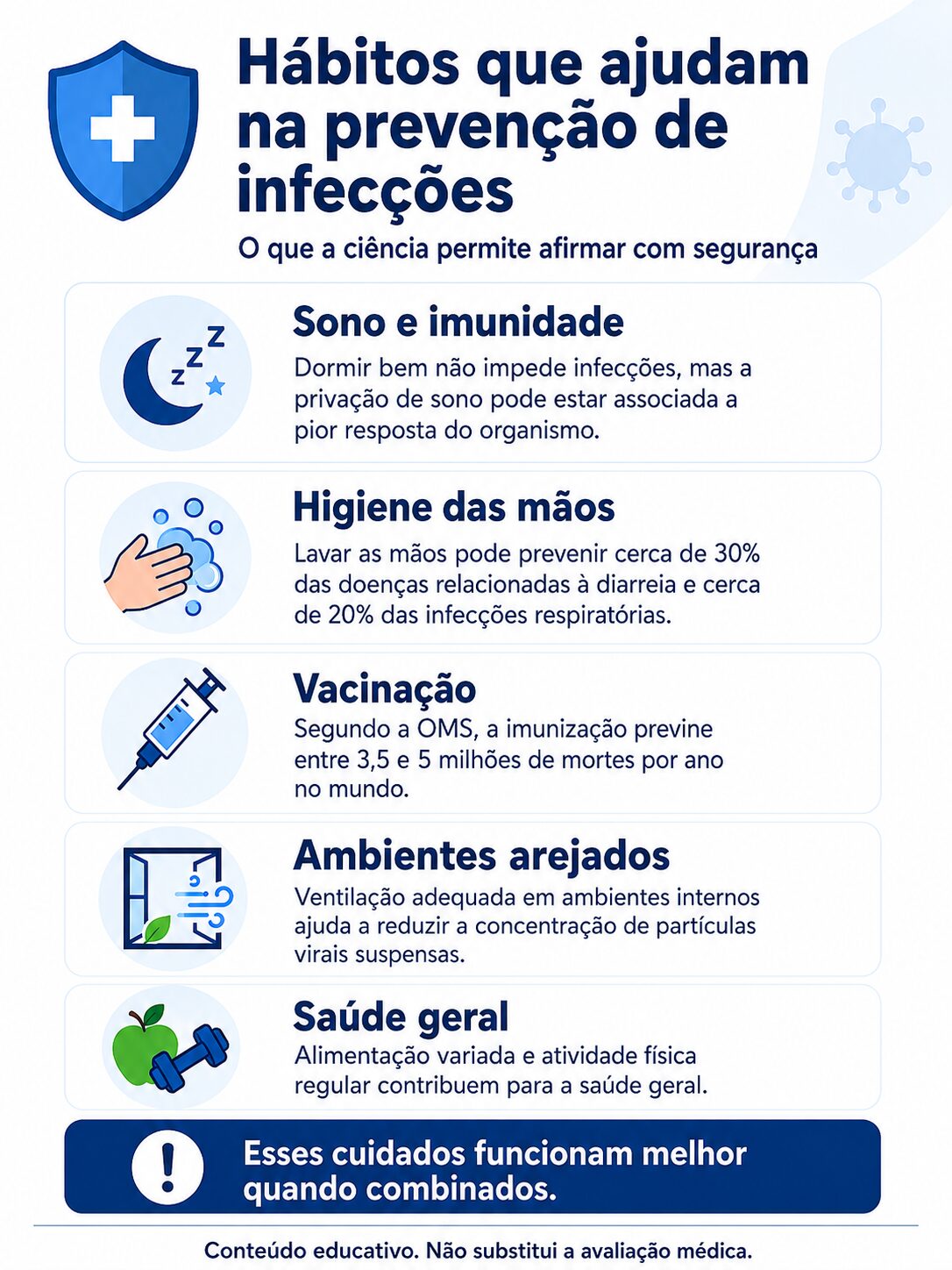
According to the World Health Organization, immunization currently prevents between 3.5 and 5 million deaths per year worldwide from diseases such as diphtheria, tetanus, pertussis, influenza, and measles. In Brazil, the 2026 National Immunization Schedule, published by the Ministry of Health, organizes vaccination schedules by age group and specific populations, with technical guidelines for different stages of life.
Vaccination also helps explain why reliable information is so important. Brazil received certification of measles elimination in 2016, saw the virus circulate again in the following years, and regained recertification in 2024, according to the Ministry of Health and Fiocruz. This history underscores that prevention depends on proper guidance, access to health services, and maintaining high vaccination coverage rates.
In summary
Preventing infections and maintaining a healthy immune system require a set of consistent practices: staying up to date on vaccinations, practicing good hand hygiene, getting adequate sleep, staying in well-ventilated environments, eating a balanced diet, engaging in regular physical activity, and being alert to warning signs. None of these factors replaces a professional evaluation, and none should be presented as a guarantee of protection against disease.
What Does It Mean to Boost Your Immunity in Your Daily Life?
Boosting immunity, in responsible terms, means reducing factors that can harm health and maintaining habits that support the body’s proper functioning. This does not mean creating “super immunity” or eliminating the risk of infections.
The scientific literature indicates that insufficient sleep, malnutrition, a sedentary lifestyle, low vaccination rates, poor hygiene, and exposure to closed, poorly ventilated environments can affect overall health and exposure to infectious agents. The safest approach is to address these factors as part of a preventive routine, rather than as isolated solutions.
Sleep and Immunity: What Science Tells Us
Sleep plays an important role in the body’s regulation, including processes associated with the immune response. Studies have observed an association between shorter sleep duration and greater susceptibility to the common cold in controlled research settings.
This does not mean that sleeping well prevents infections, but it does suggest that sleep deprivation may be associated with a poorer immune response. As for daily routines, the safest editorial recommendation is to maintain a regular sleep schedule, ensure a suitable sleep environment, and seek professional evaluation when there is persistent insomnia, excessive sleepiness, or a significant impairment in quality of life.
Hand hygiene: a simple measure with a significant impact
Handwashing with soap and water is one of the most accessible ways to reduce the spread of microorganisms. According to the CDC, handwashing can prevent about 30% of diarrhea-related illnesses and about 20% of respiratory infections, such as colds.
This data should not be interpreted as providing absolute protection. Handwashing is most effective when combined with other preventive measures, such as vaccination, respiratory etiquette, surface cleaning in appropriate settings, and monitoring for symptoms.
Vaccination: Prevention with Individual and Collective Impact
Vaccination is one of the main public health strategies for preventing vaccine-preventable diseases. According to the WHO, vaccines help prevent millions of deaths worldwide each year. In Brazil, the 2026 National Immunization Schedule outlines vaccination regimens for different age groups, populations, and specific situations, with guidelines on doses, intervals, routes of administration, and precautions.
One example is the BCG vaccine, which is recommended in the Brazilian immunization schedule to prevent severe and disseminated forms of tuberculosis in children, in accordance with guidelines from the Ministry of Health. The indication, recommended age, and any precautions should always be verified in official documents and with health care providers.
It is also important to explain that vaccine safety is monitored. The Ministry of Health provides guidelines on the surveillance of Adverse Events Presumed to Be Attributable to Vaccination or Immunization (ESAVI) specifically to monitor possible incidents following vaccination and assess the benefit-risk ratio of immunization strategies.
Environment, Diet, and Physical Activity
Enclosed and poorly ventilated spaces can lead to higher concentrations of respirable particles in the air. The CDC/NIOSH reports that proper indoor ventilation practices can reduce the concentration of airborne viral particles and people’s overall exposure in these spaces. The EPA also recommends indoor air quality measures to reduce the spread of respiratory viruses in schools, offices, and commercial buildings.
In practice, this means keeping indoor spaces well-ventilated whenever possible, monitoring air quality in communal areas, and combining ventilation with other preventive measures, especially during periods when respiratory viruses are more prevalent.
Diet and physical activity are also part of this set of preventive measures, but they should be communicated without the promise of “boosting immunity.” The most responsible approach is to state that a varied diet, tailored to individual needs, and regular physical activity contribute to overall health. Situations such as unintentional weight loss, significant dietary restrictions, persistent fatigue, or suspected nutritional deficiencies should be evaluated by a healthcare professional.
Warning Signs: When to Seek Professional Evaluation
Content about immunity should not encourage self-medication or suggest that supplements, vitamins, or lifestyle changes can resolve persistent symptoms. When infections become frequent, prolonged, severe, or difficult to treat, the safest course of action is to seek professional evaluation.
Certain signs warrant attention: recurrent fever with no clear cause, infections that do not improve as expected, repeated need for antibiotics, unintentional weight loss, persistent fatigue, shortness of breath, progressive worsening of overall health, or symptoms that recur frequently. According to the Ministry of Health, these signs do not necessarily indicate an immune disorder, but they warrant clinical investigation.
How to Determine Whether a Health Source Is Reliable
A reliable source of information on prevention and immunity should provide verifiable information, cite the references used, and avoid promising cures, diagnoses, or guaranteed protection. It should also clearly distinguish between general guidance and individual recommendations.
In practice, this means prioritizing recognized institutions, such as the Ministry of Health, the WHO, medical societies, universities, research centers, regulatory agencies, and peer-reviewed scientific articles. Institutional blogs can serve an educational purpose, provided they cite their sources, review their content, and maintain clear boundaries: they should not prescribe, diagnose, or replace a medical consultation.
Frequently Asked Questions About Prevention and Immunity
What does it mean to boost your immunity in your daily life?
This means maintaining habits that promote overall health and reduce preventable risk factors, such as insufficient sleep, low vaccination rates, poor hygiene, a sedentary lifestyle, and frequent exposure to closed, poorly ventilated environments. No single habit guarantees protection against infections.
Which habits are most effective for prevention?
Up-to-date vaccinations, hand hygiene, adequate sleep, well-ventilated environments, a balanced diet, and regular physical activity are measures associated with disease prevention and maintaining good health. According to the CDC, handwashing can reduce about 30% of diarrhea-related illnesses and about 20% of respiratory infections.
What is the relationship between sleep and immunity?
Scientific studies have observed an association between shorter sleep duration and greater susceptibility to colds in research settings. This does not mean that sleeping well prevents illness, but it does indicate that adequate sleep is part of a healthy lifestyle.
Why is vaccination so important?
Vaccination is a preventive strategy that has both individual and collective benefits. According to the WHO, immunization prevents between 3.5 and 5 million deaths worldwide each year. In Brazil, the Ministry of Health sets out the recommendations through the National Immunization Schedule.
When should you see a doctor instead of trying to “boost your immunity” on your own?
It is recommended to seek professional evaluation if symptoms are persistent, recurrent, severe, or cause a progressive worsening of the patient’s general condition. Recurrent fever with no clear cause, infections that do not improve as expected, unintentional weight loss, persistent fatigue, and repeated need for antibiotics are examples of signs that warrant further investigation.
How can you tell if a health source is reliable?
A reliable source cites its data sources, uses recognized references, avoids making promises about results, and does not replace medical evaluation. When it comes to prevention and immunity, sources such as the WHO, the Ministry of Health, the CDC, medical societies, and peer-reviewed articles should be given priority.