














Mental Health and Sleep: How the Quality of Sleep Affects the Heart and Well-Being Starting in Middle Age
Data from the National Institutes of Health (NIH) show that insufficient sleep is a common problem among adults and may be linked to an increased cardiometabolic risk. Short or fragmented sleep is not merely a source of discomfort: it compounds existing cardiovascular risk factors, such as high blood pressure, high cholesterol, and a sedentary lifestyle, creating a scenario in which every poor night’s sleep silently amplifies the risk of cardiac events. The relationship between mental health and sleep is no longer a topic confined to psychology offices; it has come to occupy a place in preventive cardiology (American Heart Association – AHA).
The problem is that most people in this age group view poor sleep as an inevitable consequence of their daily routine, rather than as a modifiable risk factor. Chronic stress, accumulated anxiety, and emotional overload are normalized as part of everyday life in middle age. For women, there’s also the factor of menopause. Meanwhile, blood pressure rises during the night, cortisol remains elevated for longer than it should, and the heart works under a strain that rarely shows up in routine exams. This strain usually only becomes apparent when a more serious event draws attention to it.
This guide brings together the evidence on sleep, emotional health, and cardiovascular risk in a practical and accessible way. The goal is to show how the cycle of poor sleep, stress, and high blood pressure affects the body starting in middle age, which signs warrant attention, and where self-care ends and the need for professional care begins. Taking care of your mind also means taking care of your heart.
What Science Says About the Relationship Between the Heart, Mental Health, and Sleep
The link between mental health, sleep, and cardiovascular health is supported by decades of research. In 2022, the American Heart Association (AHA) included sleep duration as one of the eight essential indicators of cardiovascular health, alongside blood pressure, blood sugar, cholesterol, diet, physical activity, body weight, and smoking. Getting between 7 and 9 hours of sleep per night is now considered just as important as controlling blood pressure for protecting the heart (AHA).
In terms of mental health, the Brazilian Guidelines on Arterial Hypertension, endorsed by the Brazilian Society of Cardiology (SBC), the Brazilian Society of Hypertension (SBH), and the Brazilian Society of Nephrology (SBN), recognizes that psychosocial factors, such as anxiety disorders and depression, are associated with a higher incidence of hypertension, arrhythmias, and coronary events. The mechanism is not merely behavioral. When emotional stress becomes chronic, it persistently activates the hypothalamic-pituitary-adrenal axis, maintaining elevated levels of cortisol and adrenaline in the body. This state of constant alertness overloads the cardiovascular system, promotes systemic inflammation, and impairs the body’s ability to recover during rest.
Sleep is the period during which the cardiovascular system slows down. According to the National Institutes of Health (NIH), during restorative sleep, there is a reduction in sympathetic nervous system activity, leading to a phenomenon known as “nocturnal dipping,” in which blood pressure naturally drops by about 10%. When sleep is short, shallow, or fragmented, this drop does not occur properly. The result: the heart remains under strain even during the early morning hours (NIH).
A study published by the Latin American Society of Interventional Cardiology indicates that adults who consistently sleep less than 6 hours per night may have up to 20% greater risk of developing coronary artery disease compared to those who sleep between 7 and 8 hours (American College of Cardiology – ACC). When insufficient sleep is combined with chronic stress or symptoms of anxiety, this risk increases significantly.
Just as sleep deprivation is bad, sleeping too much also has its drawbacks. A study published in the ACC indicated that sleeping more than 9 hours a night also appears to be associated with adverse health outcomes. Although many people tend to believe that “the more you sleep, the better,” this “habit” has been linked to a 34% increase in the risk of heart attack.
Why Poor Sleep Raises Blood Pressure and Increases Cardiovascular Risk
Poor-quality sleep affects the heart in multiple ways simultaneously. Understanding these mechanisms helps illustrate why the problem goes far beyond daytime fatigue and requires genuine clinical attention.
Prolonged sympathetic activation
During a night of fragmented sleep, the sympathetic nervous system remains more active than it should. In practice, this means that heart rate and blood pressure do not drop as they should. Over time, this repeated activation contributes to the onset or worsening of high blood pressure, especially in people who already have a genetic predisposition or other associated risk factors.
Low-grade chronic inflammation
Sleep deprivation elevates inflammatory markers such as C-reactive protein and interleukin-6. Low-grade systemic inflammation is one of the central mechanisms of atherosclerosis, the process that leads to the hardening and narrowing of the arteries. For middle-aged people who already have high cholesterol or insulin resistance, this additional inflammatory effect represents a concrete and measurable risk factor (NIH).
Studies published in the Pflüger's Archive: European Journal of Physiology show that sleep deprivation also compromises immune function more broadly, reducing antibody production and altering the body’s inflammatory response. When chronic, this immune dysregulation contributes to a biological environment that is more vulnerable to cardiovascular and metabolic diseases.
Metabolic Dysregulation
Poor sleep impairs insulin sensitivity and increases insulin resistance, contributing to weight gain and elevated blood glucose levels. These metabolic factors are directly linked to cardiometabolic risk and are particularly relevant starting in middle age.
Impact of nighttime “dipping”
Under normal conditions, blood pressure drops during deep sleep. People with poor-quality sleep often exhibit a “non-dipper” pattern, meaning that their blood pressure does not drop as expected during the night. This pattern is associated with an increased risk of damage to target organs, such as the heart, kidneys, and brain, and a higher incidence of cardiovascular events over the years (NIH).
Chronic Stress, Anxiety, and Their Silent Impact on the Body Starting in Middle Age
As we reach middle age, the body responds to stress differently. The ability to recover decreases, cardiovascular reserve is lower, and the accumulation of risk factors makes each additional strain more significant. Chronic stress, which often develops gradually over years of work-related pressure, financial worries, or family responsibilities, acts as an independent cardiovascular risk factor (AHA).
Chronically elevated cortisol levels promote sodium retention, increased peripheral vascular resistance, and an elevated resting heart rate. These effects, when sustained for months or years, contribute to the development of resistant hypertension—a form of hypertension that does not respond well to conventional drug treatment.
Anxiety, in turn, often manifests itself physically before it is recognized as an emotional problem. Heart palpitations, a tightness in the chest, difficulty falling asleep, and frequent awakenings during the night are symptoms that many people attribute to drinking too much coffee or the hustle and bustle of the day. In reality, these signs may indicate a condition of anxiety that is already having a measurable impact on the cardiovascular system (AHA).
The Cycle of Poor Sleep, Anxiety, and High Blood Pressure
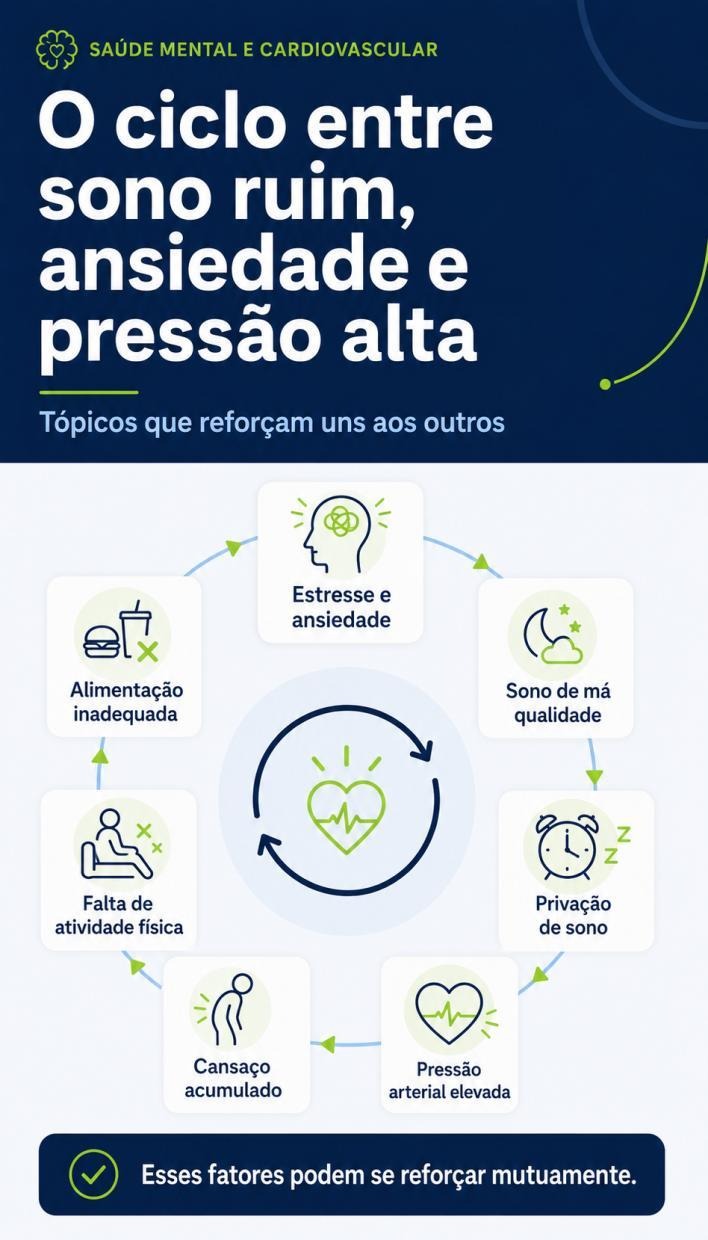
There is a self-reinforcing cycle that deserves special attention. Each stage exacerbates the next, creating a progressive spiral of risk (AHA and NIH):
- Stress and anxiety make it difficult to achieve and maintain good mental health and sleep. An alert mind prevents the relaxation needed to fall asleep.
- Poor-quality sleep increases emotional reactivity and reduces stress tolerance the following day, making everyday situations more difficult to handle.
- Sleep deprivation triggers physiological mechanisms that raise blood pressure, including sympathetic activation and sustained cortisol release.
- High blood pressure can cause nighttime awakenings and shallow sleep, creating a vicious cycle that restarts the process.
- Accumulated fatigue reduces motivation for physical activity, proper nutrition, and other protective practices. The American Heart Association (AHA) recommends at least 150 minutes of moderate aerobic activity per week to maintain cardiovascular health, but chronic fatigue makes this goal much harder to achieve.
This cycle is particularly dangerous because it operates silently. Without conscious intervention, it tends to intensify over time, progressively increasing cardiovascular risk without the individual realizing the severity of the condition.
Signs That Your Mental Health and Sleep Are Harming Your Heart
It is not always easy to recognize that sleep or emotional state is contributing to cardiovascular problems. Certain signs warrant attention, especially when they recur over the course of several weeks (AHA and CDC):
- Blood pressure that does not respond to medication: If hypertension persists despite appropriate treatment, sleep and stress should be investigated as contributing factors. Resistant hypertension is strongly associated with sleep disorders and chronic, untreated emotional states.
- Persistent fatigue upon waking: feeling exhausted even after a seemingly full night’s sleep may indicate fragmented sleep, obstructive sleep apnea, or both. This pattern impairs nocturnal cardiovascular recovery.
- Increased resting heart rate: For adults in general, a resting heart rate between 60 and 100 beats per minute is considered normal. Heart rates above this range warrant medical attention.
- Excessive irritability and difficulty concentrating: when these symptoms persist, they may indicate either sleep deprivation or anxiety disorders that are already having a physiological impact.
- Loud snoring with pauses in breathing reported by a partner: this is a classic indicator of obstructive sleep apnea, a condition strongly associated with hypertension, arrhythmias, and the risk of heart attack and stroke.
- Frequent use of alcohol or medications to “help you fall asleep”: self-medication to induce sleep masks the underlying problem and can worsen both sleep quality and cardiovascular risk.
The presence of two or more of these symptoms over the course of several weeks warrants a medical evaluation that includes both a cardiovascular assessment and an evaluation of mental health and sleep.
Where does self-care end and the need for professional help begin?
Self-care practices such as sleep hygiene, reducing stimuli before bedtime, regular physical activity, and breathing techniques have a real and documented impact on sleep quality and emotional regulation. For many men, adjusting these habits can lead to a significant improvement.
However, self-care has clear limits. It is insufficient when (AHA, Mayo Clinic, and CDC):
- Sleep remains poor despite consistent changes to the routine.
- There are signs of obstructive sleep apnea, such as loud snoring, pauses in breathing, and excessive daytime sleepiness.
- Anxiety or stress persistently interfere with daily functioning, relationships, or work.
- Blood pressure remains high or unstable despite medication.
- There are recurring physical symptoms, such as palpitations, chest pain, or shortness of breath, with no organic cause identified in the initial tests.
In these situations, the professional evaluation should ideally involve an integrated approach: a cardiologist, a sleep medicine specialist, and, when indicated, a psychiatrist or psychologist. Fragmented care, in which each specialist focuses only on their own area of expertise, is one of the factors that delay diagnosis and appropriate treatment of these interconnected conditions.
Practical Strategies for Protecting Mental Health, Sleep, and Heart Health in Middle Age
Some measures have consistent evidence of benefits for sleep quality and cardiovascular health in this age group. The key is consistency: one-time interventions have little impact. What makes a difference is establishing a sustainable routine over the course of weeks and months (AHA, CDC, and NIH).
- Maintain a regular sleep-wake schedule, including on weekends. The regularity of the sleep-wake cycle is just as important as the total amount of sleep.
- Limit your exposure to screens and bright artificial light. Blue light suppresses melatonin production and delays the onset of sleep.
- Include regular physical activity in your routine, preferably in the morning or early afternoon. The American Heart Association (AHA) recommends at least 150 minutes per week of moderate-intensity aerobic activity, such as brisk walking, combined with muscle-strengthening exercises on at least two days a week.
- Avoid using alcohol as a sleep aid. Although alcohol makes it easier to fall asleep, it disrupts sleep during the second half of the night and interferes with deep sleep—precisely the phase during which the “dip” in blood pressure occurs.
- Monitor blood pressure at various times of day, including nighttime measurements when possible, to identify “non-dipper” patterns that go unnoticed during routine visits.
- Recognize emotional signs without downplaying them. Chronic irritability, loss of interest in activities that were once enjoyable, and a persistent feeling of being overwhelmed are neither “just a phase” nor an inevitable consequence of aging. They are signs that warrant evaluation.
Frequently Asked Questions
How many hours of sleep are recommended to protect the heart starting in middle age?
The American Heart Association (AHA) recommends 7 to 9 hours of sleep per night as part of the essential indicators of cardiovascular health. Consistently sleeping less than 6 hours is associated with up to a 20% higher risk of coronary artery disease, and sleeping more than 9 hours may also be associated with cardiovascular problems.
Can emotional stress really cause high blood pressure?
Yes. Chronic stress maintains elevated levels of cortisol and adrenaline, leading to sodium retention, increased vascular resistance, and an accelerated heart rate. When this condition persists for months or years, it contributes to the development of hypertension, including forms that are resistant to conventional drug treatment.
How can I tell if my mental health and sleep are affecting my blood pressure?
Indicative signs include blood pressure that does not respond to medication, fatigue upon waking even after a full night’s sleep, loud snoring with pauses in breathing, and an elevated resting heart rate. Ambulatory blood pressure monitoring (ABPM) can reveal abnormal nighttime patterns that do not show up in office measurements.
Does physical activity improve both sleep quality and cardiovascular health at the same time?
Yes. Regular physical activity improves sleep architecture, reduces the time it takes to fall asleep, alleviates symptoms of anxiety, and directly contributes to blood pressure control. The recommendation is for at least 150 minutes per week of moderate aerobic activity, preferably done in the morning or early afternoon so as not to interfere with nighttime sleep (AHA).
When should I see a doctor about my sleep?
Seek professional evaluation if your sleep remains poor after making changes to your routine, if you experience loud snoring with pauses in breathing, excessive daytime sleepiness, or if symptoms such as palpitations, chest pain, or persistent anxiety accompany these symptoms (Mayo Clinic). A comprehensive evaluation, involving a cardiologist and a sleep specialist, offers the best outcomes for conditions in which sleep, emotional health, and cardiovascular risk overlap.
Sources consulted
https://www.heart.org/en/healthy-living/healthy-lifestyle/lifes-essential-8
https://www.ahajournals.org/doi/10.1161/CIR.0000000000001078
https://www.cdc.gov/sleep/about/index.html
https://pmc.ncbi.nlm.nih.gov/articles/PMC12482946
https://pmc.ncbi.nlm.nih.gov/articles/PMC8730491
https://pmc.ncbi.nlm.nih.gov/articles/PMC4688585
https://pmc.ncbi.nlm.nih.gov/articles/PMC3724567
https://pmc.ncbi.nlm.nih.gov/articles/PMC3256323
https://pmc.ncbi.nlm.nih.gov/articles/PMC8602722
https://pmc.ncbi.nlm.nih.gov/articles/PMC4948792
https://www.jacc.org/doi/10.1016/j.jacc.2019.07.022
https://www.nhlbi.nih.gov/health/sleep-deprivation
https://www.ahajournals.org/doi/10.1161/CIR.0000000000000988
https://www.heart.org/en/health-topics/sleep-disorders/sleep-apnea-and-heart-disease-stroke
https://www.nimh.nih.gov/health/topics/anxiety-disorders
https://www.nimh.nih.gov/health/publications/depression
https://www.mayoclinic.org/diseases-conditions/insomnia/symptoms-causes/syc-20355167