













Heart-Healthy Eating: A Practical Guide with Choices That Fit Into Your Routine
Cardiovascular diseases remain among the greatest public health challenges in Brazil and around the world. According to the World Health Organization, they are the leading cause of death globally. In Brazil, approximately 400,000 people died in 2022 from cardiovascular problems, according to the Global Burden of Disease study, published by the Ministry of Health’s Virtual Health Library. Diet is one of the modifiable factors that can influence this risk, as it is related to blood pressure, cholesterol, blood glucose, body weight, and other important markers of cardiovascular health.
Even with so much information available, a practical question remains: What changes should we make to our eating habits to take better care of our hearts without resorting to restrictive diets, fad diets, or lists that are impossible to follow? This is a legitimate question, because guidelines that are too general or too extreme don’t always help those looking to improve their diet in a realistic way.
This guide provides a practical overview of the principles of a diet that promotes cardiovascular health. The aim is to present food groups with proven health benefits, suggest simple substitutions for everyday meals, and demonstrate how small choices can contribute to a more balanced lifestyle. The content is intended for educational purposes only and is not a substitute for an individual assessment by a doctor or nutritionist.
Why a Heart-Healthy Diet Is Essential
Diet affects cardiovascular risk factors simultaneously. According to the CDC, diets high in saturated fat, trans fat, cholesterol, and sodium are associated with an increased risk of heart disease, atherosclerosis, and high blood pressure. The American Heart Association (AHA), on the other hand, recommends a diet that includes a variety of fruits, vegetables, whole grains, legumes, nuts, fish, and sources of unsaturated fat to support cardiovascular health.
It is not a single food item that determines risk or protection, but rather the combination of choices made repeatedly over time. For this reason, small, sustainable changes are usually more realistic than major, temporary restrictions. Replacing some ultra-processed foods with fresh or minimally processed foods, increasing fiber intake, and gradually reducing excess sodium are examples of adjustments consistent with the recommendations of the Ministry of Health’s Dietary Guidelines for the Brazilian Population.
Food groups that make a difference in cardiovascular health
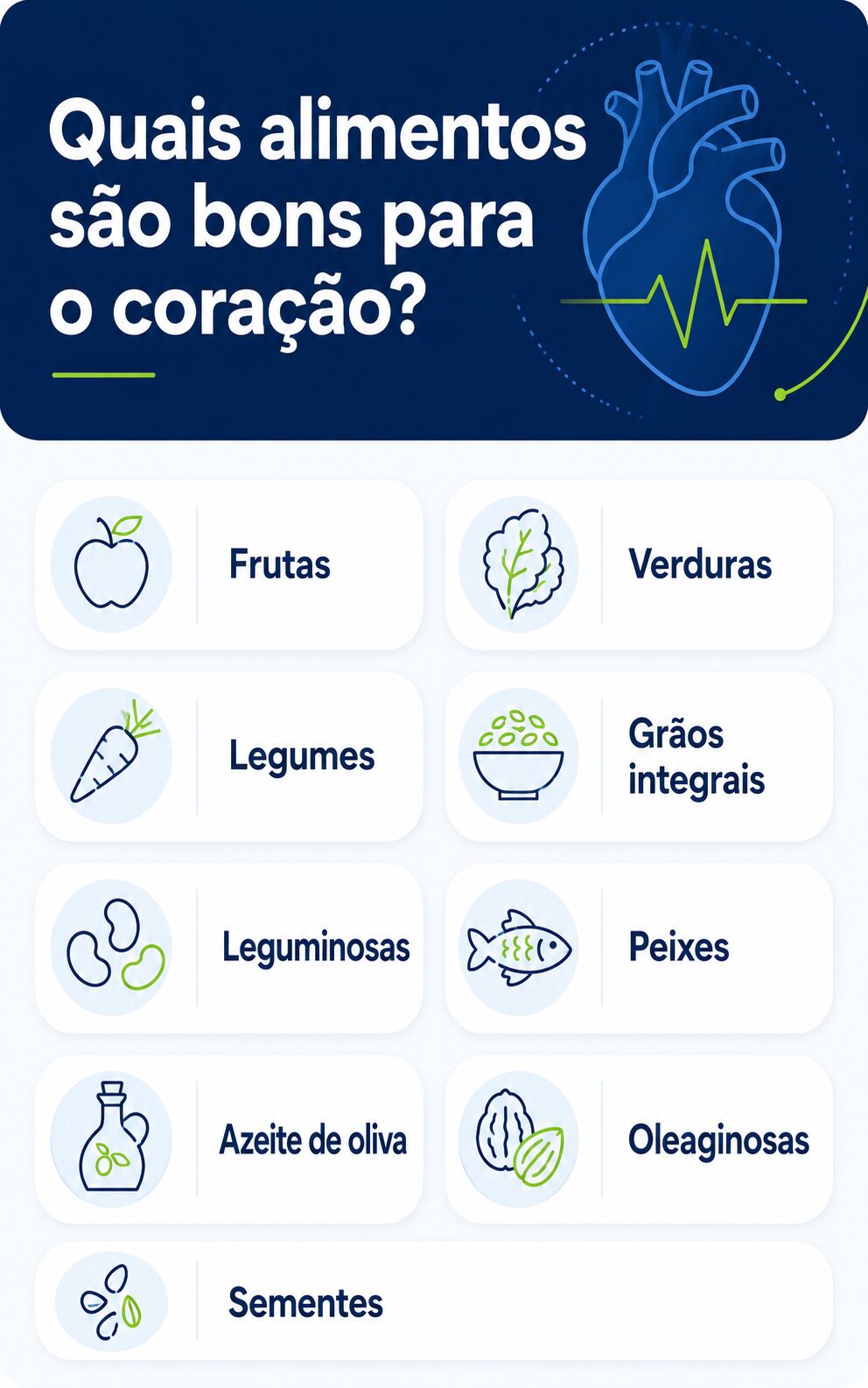
A heart-healthy diet can be organized by food groups. This helps you see what can be included on your plate, rather than focusing only on what should be left out. According to the American Heart Association (AHA) and the Ministry of Health, a heart-healthy diet should prioritize fresh or minimally processed foods, such as fruits, vegetables, legumes, whole grains, pulses, nuts and seeds, and sources of unsaturated fat.
Fruits and vegetables provide fiber, vitamins, minerals, and bioactive compounds—substances naturally found in plants that, even though they are not essential nutrients, can have a protective effect on the body. This is the case with lycopene, which gives tomatoes and watermelons their red color, and with anthocyanins, found in purple fruits such as grapes and açaí. Whole grains, such as oats, brown rice, and quinoa, also provide fiber and can help control cholesterol and blood sugar levels when they are part of a balanced diet. Legumes, such as beans, lentils, chickpeas, and peas, combine fiber and plant-based protein, in addition to being a staple of the Brazilian diet.
Fish, olive oil, avocados, chestnuts, walnuts, and seeds provide unsaturated fats. The American Heart Association (AHA) recommends prioritizing these types of fats over common sources of saturated fat, such as fatty meats, butter, and some ultra-processed foods. The logic is simple: the more these food groups appear in meals, the less room there tends to be for ultra-processed foods, which are high in sodium, sugar, and lower-quality fats.
Foods That Help Control Cholesterol and Blood Pressure
Certain food groups can help control key health markers, such as cholesterol and blood pressure. The Mayo Clinic notes that soluble fiber, found in foods such as oats, beans, apples, and pears, can reduce the absorption of cholesterol into the bloodstream. Studies reviewed in PubMed Central/NIH also point to oat beta-glucan as a fiber associated with lowering LDL cholesterol.
With regard to blood pressure, the World Health Organization (WHO) emphasizes that reducing sodium intake is an important public health measure, as excess sodium is linked to high blood pressure and an increased risk of cardiovascular disease. The WHO recommends that adults consume less than 2,000 mg of sodium per day, which is equivalent to less than 5 g of salt.
Foods such as fruits, vegetables, legumes, and whole grains can help you establish a heart-healthy eating pattern. On the other hand, ultra-processed foods, processed meats, ready-made seasonings, and sugary drinks should be consumed less frequently, as recommended by the Dietary Guidelines for the Brazilian Population and the American Heart Association (AHA).
These foods are not a substitute for medical treatment, prescription medications, or nutritional counseling. They serve as allies within a balanced diet, and their effects depend on consistency and the overall context of your daily routine.
Simple changes that fit into your daily routine
Making a sudden dietary change for heart health is often difficult to sustain. Gradual changes may be more realistic. The Dietary Guidelines for the Brazilian Population recommend choosing fresh or minimally processed foods and home-cooked meals over ultra-processed foods.
Some possible substitutions include: using olive oil to dress salads instead of store-bought dressings; alternating between white rice and brown rice throughout the week; including a piece of fruit in your snack instead of filled cookies or salty snacks; using garlic, onion, lemon, herbs, and spices to reduce your reliance on salt; swapping processed meats for less processed options; frequently including legumes in your meals; choose water as your main beverage instead of soda and store-bought juices.
None of these substitutions require advanced culinary skills. The key is consistency: making better choices most of the time, without turning eating into a strict list of restrictions.
Sodium, saturated fat, and sugar: how to cut back without sacrificing enjoyment
As we’ve seen, excess sodium, saturated fat, and added sugar are the biggest threats to cardiovascular health—and much of these three comes from the same products: ultra-processed foods, deli meats, ready-made seasonings, canned foods, ready-to-eat meals, and sugary drinks. The good news is that there’s now a simple tool to help you identify them when shopping. Since October 2022, Anvisa has required front-of-package nutrition labeling: products high in added sugars, saturated fats, or sodium must display a magnifying glass symbol at the top of the front of the package. Checking for this magnifying glass symbol before adding the product to your cart is a quick way to compare options without having to memorize numbers. The nutrition facts panel, now standardized in black text on a white background, complements this information.
Added sugar also warrants attention. Frequent consumption of soft drinks, boxed juices, chocolate drinks, and processed sweets can contribute to weight gain, insulin resistance, and elevated triglyceride levels. The goal is not to eliminate all sweets, but to reduce the frequency and amount of sugar found in everyday products.
Weekly Checklist of Eating Habits for Heart Health
This checklist can serve as a visual guide to help you track your own routine. It should not be interpreted as a strict goal or clinical rule. The idea is to observe which habits you already have and which ones you can gradually incorporate.
- I include fruits and vegetables most days.
- I ate whole grains at some of my meals this week.
- Include legumes, such as beans, lentils, or chickpeas.
- I ate fish or other sources of unsaturated fat.
- I used olive oil or other unsaturated fats in moderation.
- I cut back on salt and focused on using natural seasonings.
- I avoided processed meats and ultra-processed foods for most of the week.
- I made water my main beverage.
- I cut back on sugary drinks.
- I read the label on a product before buying it.
Progress occurs when these habits are no longer a one-time effort but become part of your routine. For people with high blood pressure, high cholesterol, diabetes, kidney disease, a history of cardiovascular disease, or who are taking medication, dietary choices should be guided by a healthcare professional.
Diet and Cardiovascular Health Throughout Life
Nutritional needs and cardiovascular risks can change over the course of a person’s life. Therefore, diet should be viewed as part of ongoing self-care, along with physical activity, sleep, stress management, and medical follow-up.
In early adulthood, establishing healthy eating habits helps lay the groundwork for disease prevention. Between the ages of 40 and 60, factors such as blood pressure, cholesterol, blood sugar, and body weight often require closer attention, especially when there is a family history or other risk factors. After age 60, there may be a greater need to focus on protein intake, hydration, maintaining muscle mass, and sodium intake—always based on an individual assessment.
At any stage, it’s worth remembering that diet is only one part of cardiovascular care. Regular physical activity, quality sleep, stress management, not smoking, and medical follow-up round out the protective measures.
Frequently Asked Questions About Diet and Heart Health
What foods are good for the heart?
Fruits, vegetables, legumes, whole grains, pulses, fish, olive oil, nuts, and seeds are among the food groups recommended by the American Heart Association (AHA) and the Ministry of Health’s Manual on Heart-Healthy Eating. The protective effect stems from the overall dietary pattern, not from any single food item.
What should you eat to lower your cholesterol?
Foods rich in soluble fiber, such as oats, beans, apples, and pears, can help reduce cholesterol absorption, according to the Mayo Clinic. Nuts, olive oil, and fish can also be part of a diet that supports a healthy lipid profile, as long as they are combined with a reduction in saturated fats and ultra-processed foods. People with high cholesterol should follow medical and nutritional guidance.
How can you reduce the amount of salt in your food without losing flavor?
A practical strategy is to replace some of the salt with natural seasonings, such as garlic, onion, lemon, fresh herbs, and spices. The World Health Organization (WHO) recommends less than 5 g of salt per day for adults, and the Dietary Guidelines for the Brazilian Population emphasize the importance of cooking more at home and reducing the consumption of ultra-processed foods.
Do I need to cut all fat out of my diet to protect my heart?
No. The American Heart Association (AHA) distinguishes between different sources of fat. Unsaturated fats, found in olive oil, fish, nuts, seeds, and avocados, can be part of a balanced diet. What should be reduced is the frequent consumption of excessive amounts of saturated fat and, especially, trans fat found in some ultra-processed foods.
Which fruits and vegetables are best for cardiovascular health?
The safest recommendation is to vary your food choices and include fruits and vegetables regularly. Different vegetables provide fiber, potassium, magnesium, and bioactive compounds. Rather than relying on a specific food, the most important thing is to maintain variety and frequency as part of a balanced diet.
Eating right to protect your heart doesn't require a radical change. It requires attention, consistency, and a willingness to make slightly better choices each week. The checklist in this guide can serve as a starting point, but it is no substitute for an individual assessment by a healthcare professional.