













Atherosclerosis: What It Is, How It Develops, and Why Understanding This Condition Can Change the Way You Take Care of Your Heart
In Brazil, cardiovascular diseases account for about 30% of all deaths recorded each year, according to the Brazilian Society of Cardiology. Behind many of these deaths lies a silent process that begins decades before the first symptom appears: the gradual buildup of fatty plaques on the inner walls of the arteries. This process has a name, a mechanism well-described by science, and a direct link to factors that millions of Brazilians are already familiar with, such as high blood pressure and high cholesterol.
The problem is that many people only hear about atherosclerosis when they’re already facing a serious consequence, such as a heart attack or a stroke. Up to that point, the condition progresses painlessly, without any visible warning signs, and often without the patient realizing that their routine tests had already indicated a risk. Why is something so common and so dangerous still so poorly understood outside of doctors’ offices?
This article explains what atherosclerosis is, how it forms inside the arteries, what factors accelerate its progression, and how it is linked to the most feared cardiovascular events. Rather than simply translating medical terminology, the goal is to provide a clear roadmap so you can understand what’s happening in your body and what you can do in your daily life to reduce this risk.
What Is Atherosclerosis and How Does It Develop?
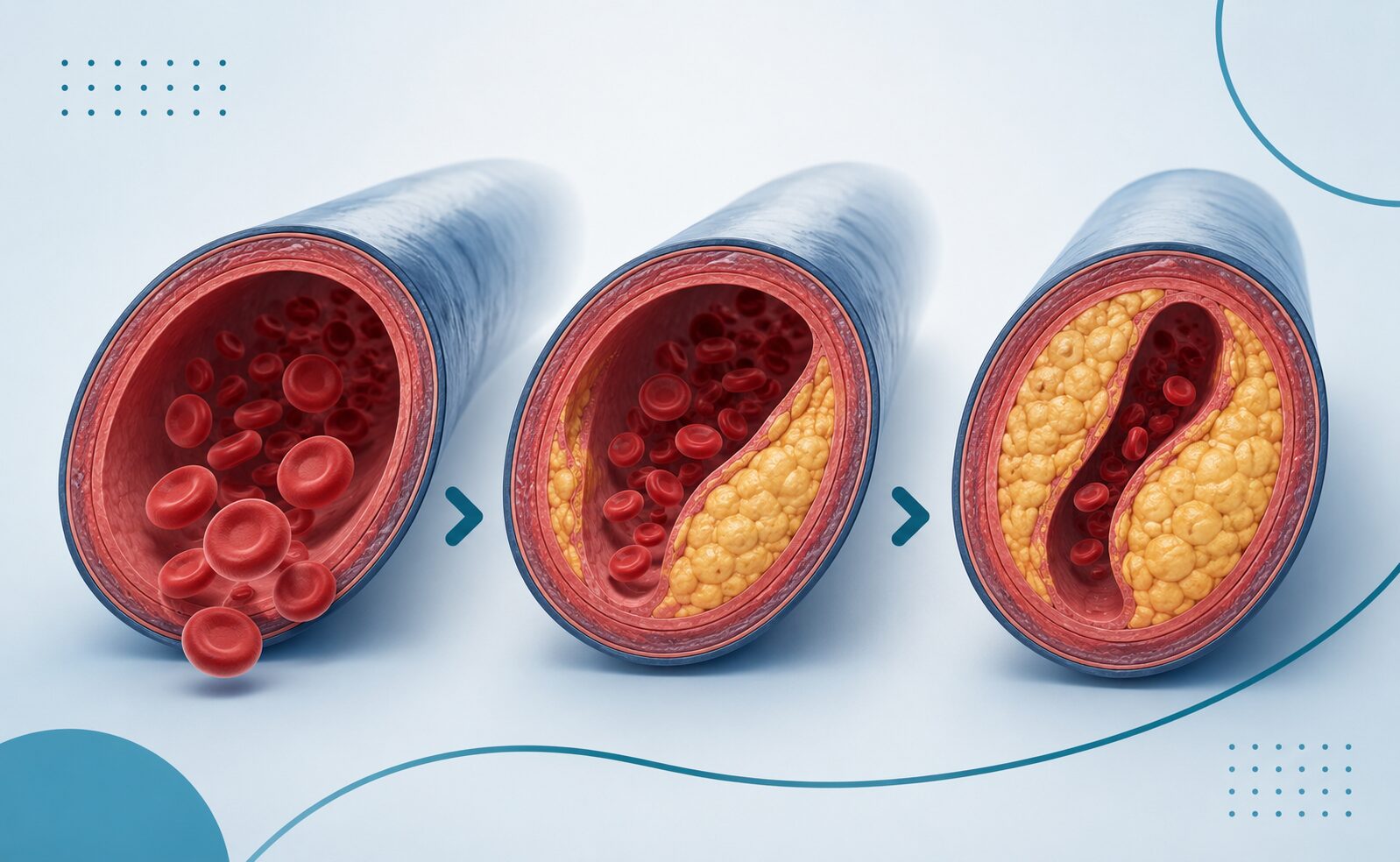
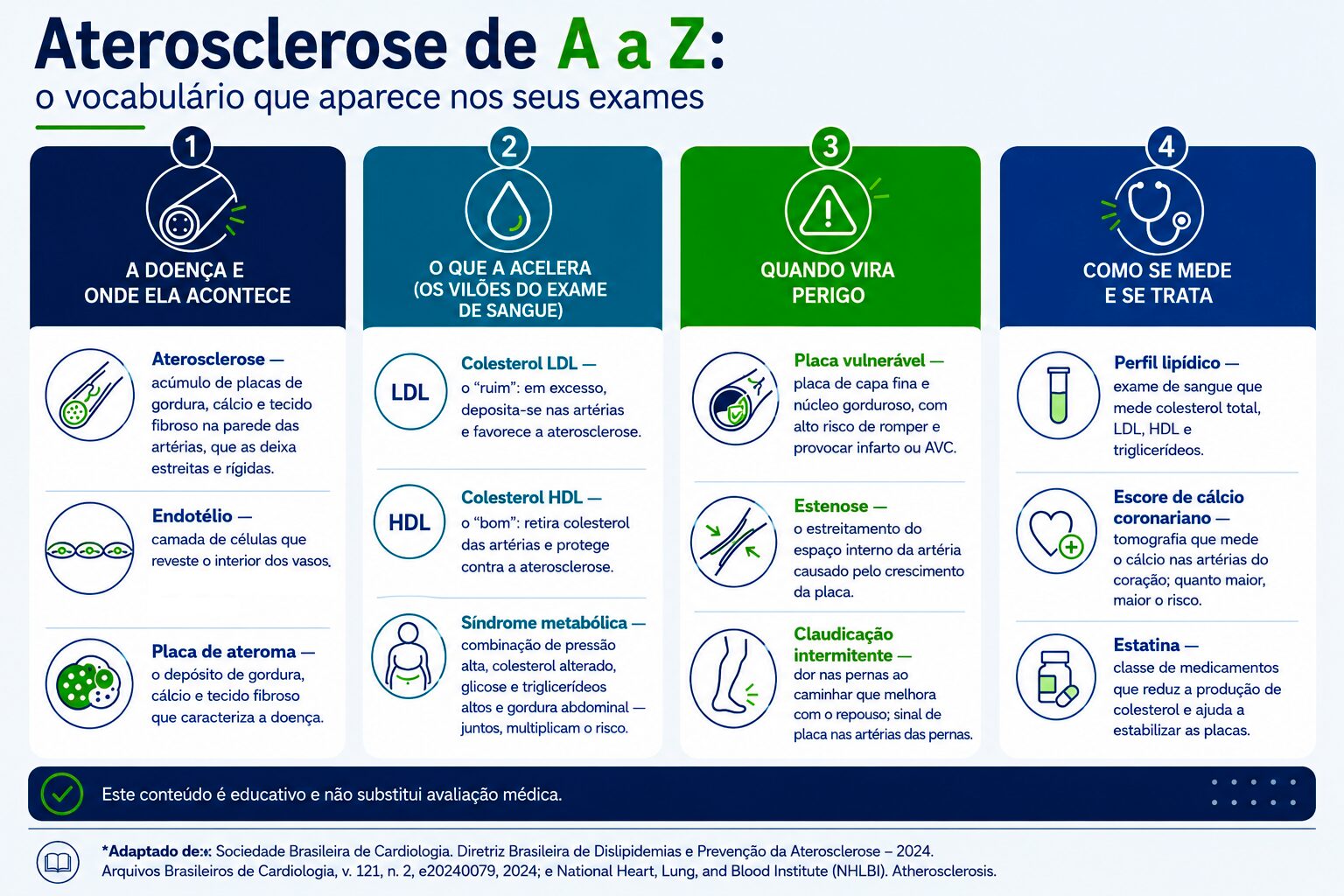
Atherosclerosis is a chronic, progressive disease in which plaques of fat, calcium, and other substances build up on the inner walls of the arteries, causing these blood vessels to become narrower and stiffer over time. The result is a reduction in blood flow to the organs, including the heart and brain.
The process begins with dysfunction of the endothelium—the innermost layer of the artery—associated with the accumulation of cholesterol in the vessel wall. This dysfunction is exacerbated by factors such as high blood pressure, excess LDL cholesterol in the blood, smoking, or high glucose levels. In this scenario, LDL particles cross the endothelium through a process called transcytosis and become trapped in the intima of the artery, where they trigger a local inflammatory response.
Immune system cells called macrophages take up this modified LDL—such as oxidized LDL—via specific receptors. The accumulation of lipids in these cells leads to the formation of so-called foam cells, which contribute to the development of fatty streaks and, later, atherosclerotic plaques. Over time, these streaks evolve into more complex plaques, composed of fat, fibrous tissue, and calcium deposits.
This process doesn't happen overnight. Autopsy studies have already identified fatty streaks in the arteries of adolescents and young adults, long before any symptoms appear. Atherosclerosis can take decades to cause noticeable symptoms, which explains why many people only discover the condition during a medical emergency.
LDL cholesterol, high blood pressure, and other factors that accelerate the process
While atherosclerosis is a slow process, certain factors act as accelerators. The more of these factors that are present at the same time, the faster plaque accumulates and the sooner symptoms may appear.
High LDL cholesterol
LDL cholesterol is often called “bad cholesterol” because, when present in excess, it builds up on the walls of the arteries and directly contributes to plaque formation. Keeping LDL within the levels recommended by your doctor is an important and effective way to slow the progression of atherosclerosis.
High blood pressure
High blood pressure exerts excessive force against the walls of blood vessels, causing microlesions in the endothelium. These lesions facilitate the entry of cholesterol and trigger the inflammatory process. People who have both high blood pressure and high cholesterol at the same time are at greater cardiovascular risk than those with either condition alone.
Other relevant factors
- Smoking: Substances in cigarettes damage the endothelium, lower HDL cholesterol (the “good” cholesterol), and promote blood clot formation.
- Diabetes and insulin resistance: High blood glucose levels accelerate vascular inflammation and make plaques more unstable.
- Sedentary lifestyle: A lack of regular physical activity is associated with poorer cholesterol profiles, greater insulin resistance, and higher blood pressure.
- Abdominal obesity: The accumulation of visceral fat releases inflammatory substances that contribute to the progression of plaque.
- Family history: Having first-degree relatives who have experienced early cardiovascular events increases the risk, even when other factors are under control.
- Age and sex: The risk increases with age. Men tend to develop atherosclerosis earlier, while women see their risk increase significantly after menopause.
It is worth noting that these factors rarely occur in isolation. The combination of high blood pressure, high cholesterol, and abnormal glucose levels in the same test constitutes what is known as metabolic syndrome, a condition that substantially increases cardiovascular risk.
What is the relationship between atherosclerosis, heart attack, and stroke?
Atherosclerosis is the mechanism that links seemingly unrelated risk factors to serious cardiovascular events. Understanding this connection helps explain why doctors insist on monitoring blood pressure and cholesterol even when patients feel fine.
How Atherosclerosis Causes a Heart Attack
When a fatty plaque ruptures in a coronary artery (the arteries that supply blood to the heart muscle), the body reacts by activating platelets and the clotting mechanisms, leading to the formation of a clot at the site of the rupture. If this clot is large enough to completely block blood flow, the region of the heart that depended on that artery stops receiving oxygen. This is an acute myocardial infarction.
How Atherosclerosis Causes Stroke
The same mechanism can occur in the arteries that carry blood to the brain. A plaque can rupture and lead to the formation of a clot that blocks blood flow to the brain, causing an ischemic stroke. In other cases, fragments of the plaque break off and travel through the bloodstream until they block a smaller blood vessel in the brain.
The concept of a vulnerable plate
Not all atherosclerotic plaques pose the same risk. Plaques with a thin fibrous cap and a fat-rich core are considered vulnerable, or unstable, because they are more likely to rupture. This helps explain why the degree of vessel obstruction, on its own, does not determine the risk posed by the plaque. Even a plaque that causes a minor obstruction can be more dangerous than a more obstructive plaque if it exhibits characteristics of vulnerability.
Some heart attacks are caused precisely by plaques that have not yet significantly narrowed the artery. Therefore, controlling cardiovascular risk factors is important not only to slow the progression of plaque but also to reduce the risk associated with its vulnerability.
Warning signs that deserve attention before the problem gets worse
Early-stage atherosclerosis generally does not cause symptoms. Signs usually appear when the narrowing of the artery has already significantly impaired blood flow or when a plaque ruptures.
Symptoms vary depending on the location of the affected arteries:
- Coronary arteries (heart): chest pain or pressure during physical exertion or emotional stress; shortness of breath disproportionate to the level of exertion; persistent fatigue with no apparent cause.
- Carotid arteries (brain): sudden weakness or numbness on one side of the body, difficulty speaking, temporary loss of vision in one eye.
- Peripheral arteries (legs): leg pain when walking that improves with rest (intermittent claudication), foot sores that take a long time to heal.
These signs should not be ignored or attributed solely to aging. Any new symptom involving chest pain, loss of strength on one side of the body, or sudden difficulty breathing requires immediate medical evaluation.
For those who already have high blood pressure or high cholesterol, the absence of symptoms does not mean there is no risk. Routine tests ordered by a cardiologist—such as lipid profile, blood glucose, and, in some cases, vascular imaging—can help identify atherosclerosis before it causes clinical symptoms, thereby contributing to the assessment of cardiovascular risk.
What you can do in your daily life to slow the progression
Atherosclerosis has no cure, but its progression can be slowed and, in some cases, partially stabilized. The most effective measures combine lifestyle changes with regular medical follow-up.
Food
Prioritize fruits, vegetables, legumes, whole grains, fish, and olive oil. Reduce your intake of saturated fats, trans fats, ultra-processed foods, and excess salt. This dietary pattern, similar to the Mediterranean diet, is associated with lower vascular inflammation and a better cholesterol profile.
Physical activity
The general recommendation is at least 150 minutes per week of moderate-intensity aerobic activity, such as brisk walking, swimming, or cycling. Regular exercise improves HDL cholesterol levels, lowers blood pressure, helps with weight control, and reduces insulin resistance. For those with a diagnosed heart condition, the type and intensity of exercise should be determined in consultation with a doctor.
Tobacco Control
Quitting smoking is one of the interventions with the greatest impact on vascular health. The benefits begin to appear within the first few weeks after quitting: blood pressure decreases, HDL cholesterol begins to rise, and endothelial function gradually improves.
Adherence to Medication Treatment
Medications for blood pressure control, statins for lowering cholesterol, and oral antidiabetics are prescribed based on an individual’s risk profile. Stopping or adjusting the dose on your own can undermine all your prevention efforts. Talk to your doctor about any questions or side effects before changing your treatment.
Regular monitoring
Keeping up with regular checkups and tests allows the doctor to monitor changes in risk factors and adjust the care plan. Blood pressure, lipid profile, blood glucose levels, and—when indicated—tests such as the coronary calcium score help measure the extent to which atherosclerosis is progressing.
Frequently Asked Questions About Atherosclerosis
Is there a cure for atherosclerosis?
There is no definitive cure, but the progression can be significantly slowed, and the plaques can be stabilized through risk factor management, lifestyle changes, and proper use of medications prescribed by a doctor.
Is atherosclerosis the same thing as arteriosclerosis?
Not exactly. Arteriosclerosis is a broader term that refers to the hardening of the arteries due to any cause. Atherosclerosis is a specific type of arteriosclerosis caused by the buildup of fatty plaques. In clinical practice, the term atherosclerosis is most commonly used to describe the blockage of arteries by fatty plaques.
Is it possible to have atherosclerosis without high cholesterol?
Yes. Although high LDL cholesterol is one of the main factors, atherosclerosis is also driven by inflammation, high blood pressure, diabetes, smoking, and other factors. A person with cholesterol levels within the normal range can develop the condition if other risk factors are present.
At what age should I start worrying about atherosclerosis?
The process can begin as early as adolescence, but the risk of clinical events increases starting at age 40 to 50. For those with risk factors such as high blood pressure, high cholesterol, diabetes, or a family history of early-onset cardiovascular disease, monitoring should begin earlier, as directed by a doctor.
Which tests detect atherosclerosis?
Lipid profile and blood glucose levels are used to assess risk factors. Imaging tests, such as coronary calcium scoring, carotid ultrasound, and CT angiography, can identify the presence and extent of plaque. The doctor determines which tests are appropriate based on each patient’s risk profile.
When should I talk to my doctor about atherosclerosis?
If you have high blood pressure, high cholesterol, diabetes, or a family history of heart attacks and strokes, this topic should already be part of your medical visits. Don’t wait for symptoms to appear. Ask your doctor about your cardiovascular risk and whether you need additional tests.
Understanding atherosclerosis is the first step toward taking action before it becomes an emergency. If you’d like to learn more, check out our content on HDL and LDL cholesterol, a sedentary lifestyle and cardiovascular risk, and how the cardiovascular system works.
Sources consulted
BRAZILIAN SOCIETY OF CARDIOLOGY. Brazilian Guidelines on Dyslipidemia and Atherosclerosis Prevention – 2024. Brazilian Archives of Cardiology, vol. 121, no. 2, e20240079, 2024. Available at: https://abccardiol.org/article/diretriz-brasileira-de-dislipidemias-e-prevencao-da-aterosclerose-2024/. Accessed on: Aug. 6, 2026.
BORÉN, J. et al. Apolipoprotein B-containing lipoproteins in atherogenesis. Nature Reviews Cardiology, 2024. DOI: 10.1038/s41569-024-01111-0. Available at: https://www.nature.com/articles/s41569-024-01111-0. Accessed on: Aug. 6, 2026.
BRAZILIAN SOCIETY OF CARDIOLOGY (SBC). Cardiômetro: Deaths from Cardiovascular Diseases in Brazil. Rio de Janeiro: SBC. Available at: http://www.cardiometro.com.br/. Accessed on: Aug. 6, 2026.
NATIONAL HEART, LUNG, AND BLOOD INSTITUTE (NHLBI). Atherosclerosis. Bethesda: NHLBI. Available at: https://www.nhlbi.nih.gov/health/atherosclerosis. Accessed on: Aug. 6, 2026.
VIRMANI, R. et al. Pathology of the vulnerable plaque. Journal of the American College of Cardiology, vol. 47, no. 8, suppl., pp. C13–C18, 2006. Available at: https://www.jacc.org/doi/10.1016/j.jacc.2005.10.065. Accessed on: Aug. 6, 2026.
AMERICAN HEART ASSOCIATION (AHA). How Smoking and Nicotine Damage Your Body. Dallas: AHA. Available at: https://www.heart.org/en/healthy-living/healthy-lifestyle/quit-smoking-tobacco/how-smoking-and-nicotine-damage-your-body. Accessed Aug. 6, 2026.
BRAZIL. Ministry of Health. Dietary Guidelines for the Brazilian Population. 2nd ed. Brasília, DF: Ministry of Health, 2014. Available at: https://www.gov.br/saude/pt-br/assuntos/saude-brasil/publicacoes-para-promocao-a-saude/guia_alimentar_populacao_brasileira_2ed.pdf. Accessed: Aug. 6, 2026.
AMERICAN HEART ASSOCIATION (AHA). AHA Recommendations for Physical Activity in Adults and Children. Dallas: AHA. Available at: https://www.heart.org/en/healthy-living/exercise-and-physical-activity/fitness-basics/aha-recs-for-physical-activity-in-adults. Accessed Aug. 6, 2026.
WORLD HEALTH ORGANIZATION (WHO). Cardiovascular diseases (CVDs). Genebra: WHO. Disponível em: https://www.who.int/news-room/fact-sheets/detail/cardiovascular-diseases-%28cvds%29. Acesso em: 6 ago. 2026.