














Mobility and Quality of Life: Why Physical Activity Is Also Part of Managing Blood Pressure, Cholesterol, and Heart Health
A 52-year-old man takes his blood pressure medication as prescribed, monitors his cholesterol levels through routine checkups, and follows his cardiologist’s advice. But when he stands up from a chair after sitting for a long time, he notices stiffness in his knee. Climbing stairs has become more tiring. Bending down to tie his shoes now requires more effort. These signs may seem like just “part of getting older,” but they warrant attention when they start to limit daily activities. It is at these moments that the connection between mobility and quality of life comes into play.
Physical mobility is not a separate issue from overall health. It influences a person’s ability to walk, climb stairs, carry groceries, engage in physical activity, and maintain independence. When pain, stiffness, loss of strength, or imbalance limit movement, a person may become more sedentary. And a sedentary lifestyle is a significant factor in cardiovascular health.
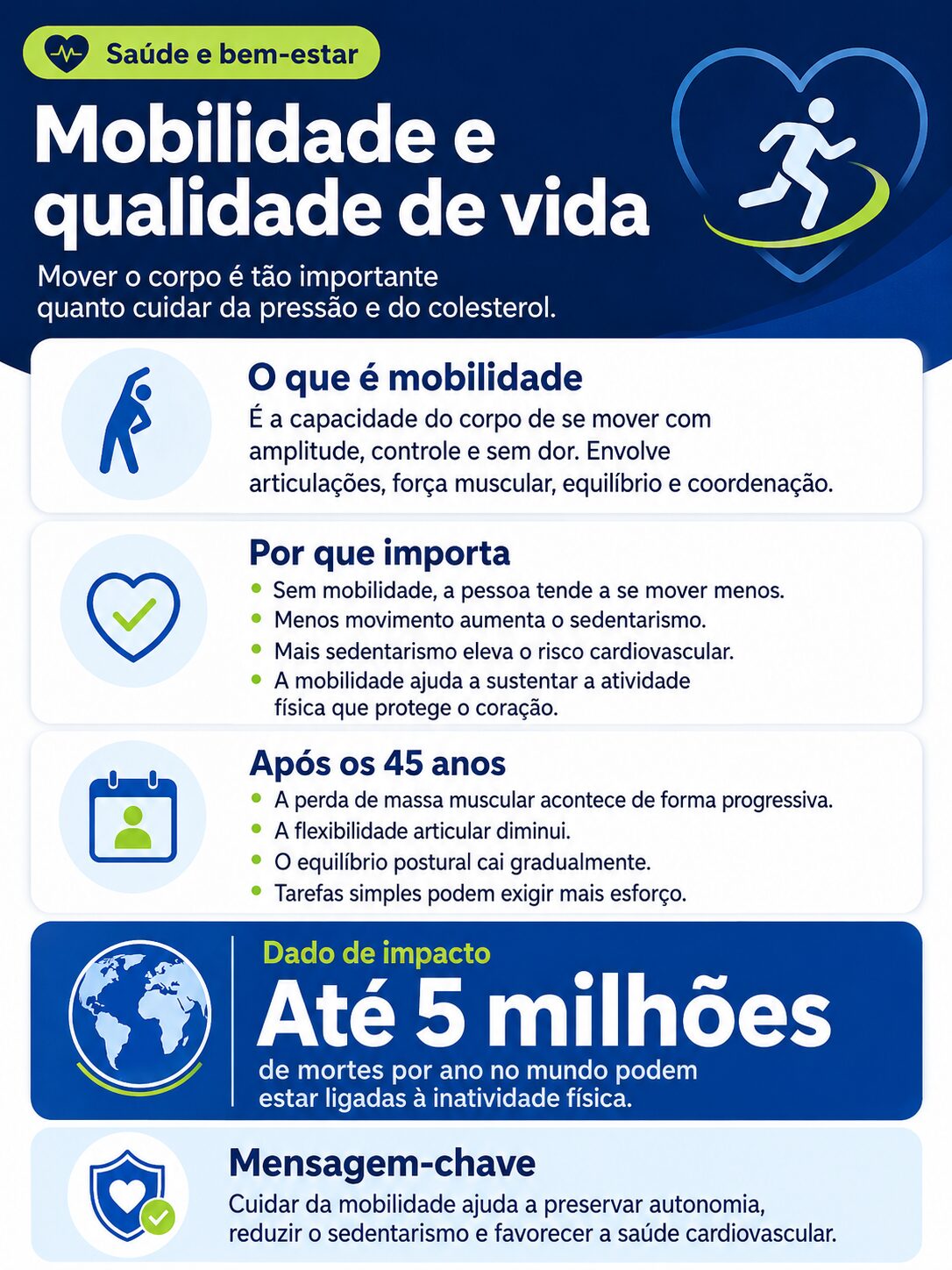
According to the World Health Organization, people who are insufficiently active have a 20% to 30% higher risk of death compared to those who are sufficiently active. The WHO also estimates that between 4 and 5 million deaths per year could be prevented if the population were more active. These figures show why physical activity should be part of the conversation about prevention and quality of life.
This guide explains the relationship between mobility, physical activity, and cardiovascular health, with a focus on men over 45 and people who already have risk factors such as high blood pressure, high cholesterol, diabetes, or a sedentary lifestyle. The goal is not to prescribe exercises or replace a professional evaluation, but to help you recognize signs and ask more specific questions during your appointment.
What Is Mobility and Why Does It Matter? in quality of life
Mobility is the ability to move with range of motion, control, strength, balance, and safety. It involves joints, muscles, coordination, and stability. It is not the same as flexibility: a person may be able to stretch a muscle well but still have difficulty getting up from a chair, climbing stairs, or walking safely (The Guardian).
When it comes to cardiovascular health, people often think of blood pressure, cholesterol, blood sugar, weight, diet, medications, and medical tests. All of these factors are important. But mobility also needs to be part of the conversation, because it helps support regular physical activity.
The Ministry of Health’s Physical Activity Guide for the Brazilian Population emphasizes that physical activity helps prevent heart disease, type 2 diabetes, certain types of cancer, and premature death. The guide also highlights that reducing sedentary time and incorporating more movement into daily life are important steps for good health.
For this reason, mobility should not be viewed solely as an orthopedic concern. It can influence independence, energy levels, and the ability to maintain an active routine over the years.
What Can Happen to the Body Over Time
As we age, there may be a progressive loss of muscle mass, strength, and function. This process is known as sarcopenia when it reaches a clinically significant level. The Cleveland Clinic describes sarcopenia as an age-related, progressive loss of muscle mass, strength, and function that can make activities such as walking and climbing stairs more difficult and increase the risk of falls.
This process does not unfold the same way for everyone. A sedentary lifestyle, a history of injuries, chronic illnesses, poor nutrition, persistent pain, and long periods of sitting can contribute to a loss of strength, reduced balance, and lower exercise tolerance.
For men aged 40 and older, the key is not to automatically dismiss symptoms such as recurring stiffness, pain when standing up, loss of balance, or increasing difficulty with simple activities. These signs, taken individually, do not indicate a specific disease, but they may suggest that mobility should be evaluated (Cleveland Clinic).
Among the effects that may arise when mobility declines are reduced physical activity, increased time spent sitting, loss of strength, fear of falling, reduced independence, and greater difficulty in maintaining habits recommended for cardiovascular health. The relationship between mobility and quality of life is proportional: when one declines, the other follows suit.
Physical Activity, Heart Health, and Cholesterol: What's the Connection?
Physical activity does not control blood pressure or cholesterol on its own. The connection exists mainly because physical activity influences a person’s ability to stay active. When a person is able to walk, climb stairs, perform daily tasks, and engage in activities safely, it becomes easier to reduce sedentary behavior and meet physical activity goals.
The American Heart Association recommends that adults engage in at least 150 minutes per week of moderate-intensity aerobic activity or 75 minutes of vigorous activity, in addition to muscle-strengthening activities on at least two days a week. The organization also recommends spending less time sitting, as light physical activity can help offset some of the risks associated with a sedentary lifestyle.
The CDC reports that regular physical activity can lower blood pressure and improve cholesterol levels, as well as help reduce the risk of cardiovascular disease. These recommendations are not a substitute for prescribed medications or medical care, but they do show that physical activity and cardiovascular health are linked.
For someone with high blood pressure or high cholesterol, knee pain, hip stiffness, or poor balance can become practical barriers. If walking becomes painful, the person walks less. If climbing stairs makes them feel unsteady, they avoid stairs. Gradually, the body moves less, and a sedentary lifestyle takes hold.
Physical Inactivity: The Link Between Physical Limitations and Cardiovascular Risk
The Clinical Protocol and Treatment Guidelines for Systemic Arterial Hypertension, published by the Ministry of Health in 2025, recognizes hypertension as a multifactorial chronic condition and emphasizes the importance of lifestyle measures in managing the disease, including regular physical activity when indicated.
When mobility is limited, these measures can become more difficult. People may understand the recommendation to be more active, but they face physical barriers: pain, stiffness, weakness, fear of falling, or a lack of confidence to get started.
The WHO recommends reducing sedentary behavior and replacing some of the time spent sitting with physical activity of any intensity, depending on each person’s ability. For those who are inactive or have physical limitations, starting with light and safe movements can be a first step, provided that they take into account their symptoms, medical history, and professional guidance.
The main message is: mobility, physical activity, and cardiovascular health influence one another. Taking care of one can make it easier to take care of the others.
Signs That Mobility Deserves Attention
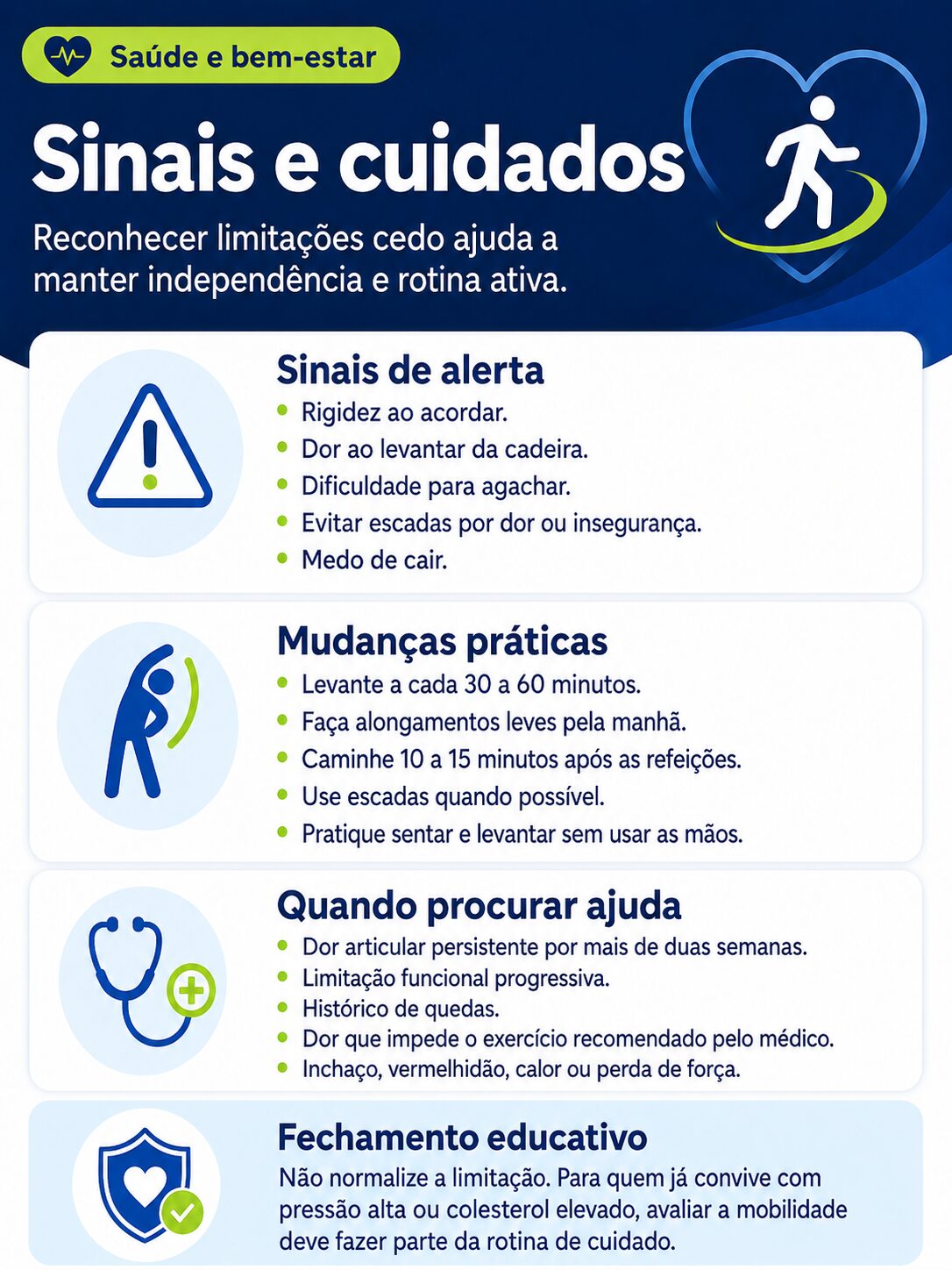
The loss of mobility usually occurs gradually. Often, people adapt their routines without realizing it: they avoid stairs, walk less, sit down to get dressed, stop doing activities that used to be simple, or start using assistive devices for everyday movements.
Some symptoms warrant attention when they are persistent, recurring, or begin to interfere with daily life:
• Stiffness upon waking or after long periods of sitting.
• Pain when getting up from a chair.
• Difficulty squatting, putting on socks, or tying shoes.
• Feeling unsure about going up or down stairs.
• Loss of balance when getting dressed or walking.
• Gradual reduction in walking distance.
• Pain that occurs during or after simple activities.
• Fear of falling.
• Noticeable loss of strength.
None of these symptoms, on their own, confirms a diagnosis. However, if they become frequent, worsen over time, or prevent you from engaging in the physical activity recommended by your doctor, it’s worth seeking an evaluation.
Simple changes that can help in your daily life
Improving mobility doesn't have to start with intense workouts. The Physical Activity Guide for the Brazilian Population (Ministry of Health) emphasizes that every bit of movement counts and that activities such as commuting, working, doing household chores, and leisure activities can also contribute to a more active lifestyle.
Here are some general tips that can help reduce sedentary time and make your body more active:
• Take regular breaks when you spend a lot of time sitting.
• Walk short distances when it is safe and comfortable to do so.
• Replace some of the time spent sitting with light physical activity.
• Talk to a healthcare professional about strength, balance, and flexibility exercises.
• Adjust the work environment to reduce postural discomfort.
• Resume activities gradually, without trying to make up for years of inactivity in just a few days.
It’s important to avoid an “all-or-nothing” mindset. For beginners, small changes can be more sustainable than overly ambitious goals. The American Heart Association also recommends gradually increasing the amount and intensity of physical activity.
People with persistent pain, excessive shortness of breath, dizziness, chest pain, a history of cardiovascular disease, or uncontrolled high blood pressure should seek medical advice before starting or increasing the intensity of their exercise routine.
When to Seek Professional Help
Not every limitation can be resolved simply by stretching or walking. In some cases, a professional evaluation is necessary to understand the cause of pain, stiffness, or loss of strength.
Seek guidance when:
• Persistent, recurrent, or progressive joint pain.
• Functional limitation that worsens over time.
• History of falls or a frequent fear of falling.
• Pain that prevents the recommended activity.
• Swelling, redness, or warmth in the joints.
• Perceived loss of strength in daily life.
• Difficulty walking, climbing stairs, or performing simple tasks.
• Cardiovascular symptoms, such as chest pain, severe shortness of breath, fainting, or persistent palpitations.
Depending on the case, the evaluation may involve a general practitioner, cardiologist, orthopedist, rheumatologist, geriatrician, physiatrist, physical therapist, or certified physical education professional. For people living with hypertension, high cholesterol, or other cardiovascular risk factors, mobility can be an important topic to address during routine follow-up visits.
Frequently Asked Questions About Mobility and Quality of Life
What is physical mobility?
Physical mobility is the ability to perform movements with range of motion, control, strength, balance, and safety. It involves joints, muscles, and coordination. It is not just flexibility.
What is the relationship between physical activity and heart health?
This relationship is primarily driven by physical activity. When people move with greater confidence and fewer limitations, they tend to be better able to reduce a sedentary lifestyle and maintain an active routine. Regular physical activity is associated with benefits for blood pressure, cholesterol, and cardiovascular risk, according to the CDC and the American Heart Association.
At what age does mobility begin to decline?
There is no single age. As we age, we may experience a gradual loss of muscle mass, strength, and balance. This process can be accelerated by a sedentary lifestyle, pain, injuries, or chronic conditions. The important thing is to pay attention to changes that limit your daily routine, not just your age.
How much exercise is necessary?
The American Heart Association (AHA) recommends at least 150 minutes of moderate-intensity aerobic activity per week or 75 minutes of vigorous-intensity activity, in addition to muscle-strengthening exercises on two days per week. For those who are just starting out or have physical limitations, the progression should be gradual and tailored to each individual’s needs.
Can I exercise if I have high blood pressure?
Physical activity is usually part of the lifestyle measures used to manage hypertension, according to the Ministry of Health. However, the type, intensity, and progression of the activity should be determined with professional guidance, especially if there are symptoms, uncontrolled blood pressure, or other health conditions.
Is stiffness upon waking normal after age 50?
Some mild, temporary stiffness may occur, but severe, persistent stiffness—especially if it is accompanied by pain or limits daily activities—should be evaluated. It is not advisable to automatically attribute everything to age.
Does joint pain prevent you from exercising?
Not always. There are adapted exercises and strategies for strengthening, balance, and flexibility that can be considered based on an evaluation. The key point is not to push through significant pain or stop the movement without seeking guidance.
Which professional can assess my mobility?
Depending on the symptoms, doctors, physical therapists, and certified physical education professionals may be involved in the evaluation. When cardiovascular risk factors are present, it is important to incorporate this discussion into the patient’s existing medical care.
Is sitting for long periods of time bad for your health?
The WHO recommends reducing the amount of time spent being sedentary and replacing some of that time with physical activity of any intensity, depending on the individual’s ability. Long periods of sitting can make it difficult to maintain strength, energy, and an active routine.
Are mobility and flexibility the same thing?
No. Flexibility is the ability of muscles and tissues to stretch. Mobility is a broader concept: it includes flexibility, strength, balance, stability, and movement control.