













HDL and LDL Cholesterol: What They Are, Actual Reference Ranges, and How to Interpret Your Test Results
In Brazil, approximately 40% of the adult population has cholesterol levels above the recommended range, according to the Ministry of Health, based on data from the Brazilian Society of Cardiology (SBC). Even so, many people receive the results of a lipid profile test without fully understanding what acronyms like HDL, LDL, and triglycerides mean. Cholesterol is often treated as the villain, but that’s an oversimplification: it’s a substance the body needs. The problem lies in the imbalance among its fractions and the cardiovascular risk associated with that profile.
When someone sees “high cholesterol” on their test results, their first reaction is usually concern. But it’s important to understand which type of cholesterol is elevated. According to the National Heart, Lung, and Blood Institute (NHLBI), LDL is known as “bad cholesterol” because high levels can contribute to the buildup of plaque in the arteries. HDL, on the other hand, is called “good cholesterol” because it helps transport cholesterol back to the liver, helping to remove excess cholesterol.
This article explains, in an accessible way, what each cholesterol fraction represents, presents reference values with explanations, and provides guidance on how to interpret lipid profile results more accurately. The final interpretation, however, should be made by a healthcare professional, taking into account age, family history, blood pressure, blood glucose levels, smoking status, the presence of diabetes, and other risk factors.
HDL and LDL Cholesterol: Why the Body Needs It
Cholesterol is a fatty substance found in the body’s cells. It plays a role in important functions, such as the formation of cell membranes, the production of hormones and vitamins, and the formation of bile acids, which aid in the digestion of fats, as described by the Ministry of Health. In addition, it plays a role in the production of certain hormones. Therefore, the goal is not to eliminate cholesterol, but to maintain a balance among its fractions and assess how they relate to each person’s cardiovascular risk.
The problem arises when there is an excess of circulating cholesterol, especially the LDL fraction. According to the NHLBI, high LDL levels can promote the buildup of fatty plaques in the arteries. This process can impede blood flow and increase the risk of events such as heart attacks and strokes.
For this reason, lipid profile results should not be interpreted in isolation. The same LDL level can have different implications for a young person with no risk factors and for someone with diabetes, hypertension, a history of cardiovascular disease, or a significant family history. The guidelines from the Brazilian Society of Cardiology emphasize that LDL targets vary according to cardiovascular risk category.
HDL and LDL: What Each One Does
Cholesterol does not circulate on its own in the blood. Because it is a fat, it must be transported by particles called lipoproteins. The two most well-known fractions in routine blood tests are LDL and HDL.
LDL, or low-density lipoprotein, transports cholesterol to the tissues. When present in excess, it can contribute to the formation of plaque on the walls of the arteries. For this reason, high LDL levels are associated with an increased risk of atherosclerosis and cardiovascular disease.
HDL, or high-density lipoprotein, works in the opposite way: it helps transport cholesterol back to the liver, where it can be processed and eliminated. Low HDL levels can indicate a higher risk profile, especially when they occur alongside high LDL, high triglycerides, diabetes, smoking, or being overweight.
The difference between HDL and LDL, therefore, lies in the role these particles play in transporting cholesterol. For the reader, the rule of thumb is simple, though not absolute: in general, lower LDL levels are desirable; very low HDL levels warrant attention. The clinical decision, however, always depends on overall cardiovascular risk.
Cholesterol Reference Values: How to Read the Chart
HDL and LDL cholesterol levels should be interpreted based on each person’s cardiovascular risk. The table below provides general guidelines for adults, but it does not replace the individualized targets set by a doctor.
| Component | Reference value | Note |
| Total cholesterol | Below 190 mg/dL | Desirable value. It should be interpreted in conjunction with the fractions. |
| HDL | Above 40 mg/dL | Desirable value. Low values warrant attention. |
| Triglycerides | Below 150 mg/dL after a 12-hour fast or below 175 mg/dL without fasting | It is the only lipid profile parameter that changes depending on fasting status. |
| LDL | It varies depending on cardiovascular risk: below 115 mg/dL for low risk, 100 mg/dL for intermediate risk, 70 mg/dL for high risk, 50 mg/dL for very high risk, and 40 mg/dL for extreme risk | The target is set by the doctor after risk stratification, not based on a single value. |
| Non-HDL cholesterol | It varies depending on cardiovascular risk: below 145 mg/dL for low risk, 130 mg/dL for intermediate risk, 100 mg/dL for high risk, 80 mg/dL for very high risk, and 70 mg/dL for extreme risk | Calculated as the difference between total cholesterol and HDL. It helps estimate the atherogenic fractions. |
The Brazilian Society of Cardiology (SBC) recommends that LDL and non-HDL cholesterol targets be adjusted according to cardiovascular risk. In people at high, very high, or extreme risk, the targets may be significantly lower than the values used for low-risk individuals.
Non-HDL cholesterol is calculated as the difference between total cholesterol and HDL. Simply put, it reflects the sum of potentially atherogenic particles—that is, those most closely associated with the formation of plaque in the arteries. For this reason, it can be used as a complementary parameter, especially when triglyceride levels are elevated.
How to Interpret a Lipid Profile
A lipid profile is a blood test that measures levels of total cholesterol, HDL, LDL, and triglycerides. Some laboratories also report non-HDL cholesterol and the ratios between these fractions.
For an initial assessment, LDL is usually one of the most important factors, because it is directly related to the risk of atherosclerosis. But LDL should not be evaluated in isolation. HDL, triglycerides, total cholesterol, and non-HDL cholesterol all help paint the full picture.
High triglycerides, for example, can occur alongside excess weight, insulin resistance, diabetes, or metabolic syndrome. The Mayo Clinic reports that high triglycerides may be associated with conditions that increase the risk of heart disease and stroke, such as obesity and metabolic syndrome — a term used to describe the simultaneous presence of several risk factors in the same person, such as increased abdominal fat, high blood pressure, impaired glucose tolerance, high triglycerides, and low HDL.
Total cholesterol on its own can be misleading. A higher total cholesterol level may reflect elevated HDL, while a similar result may be associated with abnormal LDL or triglyceride levels. Therefore, the composition of the lipid profile matters more than a single number.
High cholesterol doesn't always show symptoms
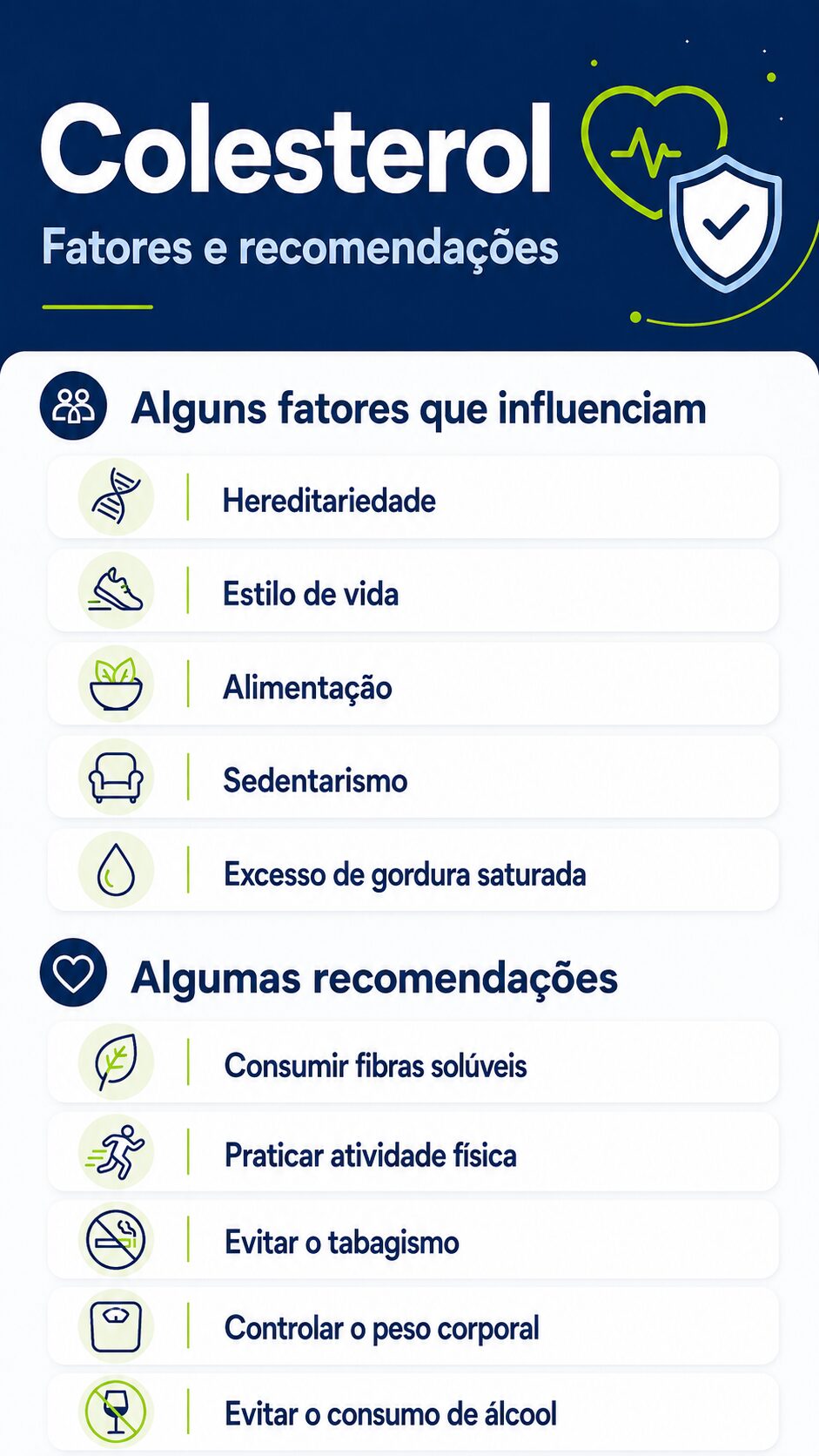
High cholesterol generally does not cause noticeable symptoms. According to the 2025 Brazilian Guidelines on Dyslipidemia and Atherosclerosis Prevention, issued by the Brazilian Society of Cardiology (SBC), high cholesterol can be hereditary, but it is also often related to lifestyle factors, such as diet, a sedentary lifestyle, and excessive saturated fat intake. The same source emphasizes that lifestyle changes and, in some cases, medications can be part of the management strategy.
When symptoms appear, they are often related to complications such as coronary artery disease, heart attack, or stroke. For this reason, a lipid profile test is important even in the absence of symptoms.
The SBC recommends that cholesterol testing be part of cardiovascular risk stratification: the frequency of testing should be determined based on each individual’s risk profile and the physician’s guidance. The 2025 Guidelines recommend the use of a risk equation to estimate the 10-year risk of a cardiovascular event in adults aged 30 to 79 without established cardiovascular disease. In the pediatric population, the guidelines recommend a complete lipid profile between the ages of 9 and 11 and, in the presence of risk factors, starting at age 2.
Diet, exercise, and habits that affect cholesterol
Lifestyle habits can influence lipid profiles, although genetic factors also play an important role. Diet, physical activity, body weight, smoking, and alcohol consumption should be evaluated together.
In the diet, soluble fiber found in foods such as oats, beans, apples, and pears helps reduce cholesterol absorption and may contribute to lowering LDL levels. The 2025 Brazilian Dietary Guidelines recommend consuming about 25 g of fiber per day. This guidance is in line with the Cardioprotective Diet Manual, developed by the Ministry of Health in partnership with the Heart Hospital (HCor), which organizes foods according to the colors of the Brazilian flag and prioritizes fresh and minimally processed foods.
With regard to fats, the 2025 Brazilian Dietary Guidelines recommend that total fat intake account for 20% to 35% of daily caloric intake, that saturated fats remain below 7%, and that trans fats not be consumed, prioritizing monounsaturated and polyunsaturated fats found in fish, nuts, seeds, and vegetable oils. This recommendation is also in line with the Manual on Cardioprotective Diet, published by the Ministry of Health in partnership with HCor, which advocates a diet based on fruits, vegetables, legumes, whole grains, pulses, and healthy sources of protein.
Regular physical activity can also help control cholesterol. The AHA recommends at least 150 minutes per week of moderate-intensity aerobic activity or 75 minutes of vigorous-intensity activity, preferably spread out over the course of the week.
Smoking deserves special attention. The AHA reports that smoking and vaping can lower HDL—the so-called “good cholesterol”—and increase cardiovascular risk when cholesterol levels are abnormal. Quitting smoking can help improve triglyceride levels, HDL levels, and arterial function.
Body weight and alcohol consumption are also taken into account in the assessment. The 2025 Brazilian Guidelines recommend weight loss through non-pharmacological means for people who are overweight or obese, which leads to an increase in HDL and a reduction in triglycerides, and opposes alcohol consumption as a strategy for the prevention or treatment of atherosclerosis.
These changes are not a substitute for medical care. In some cases, lifestyle changes may be sufficient; in others, a doctor may prescribe medication, depending on the patient’s overall cardiovascular risk.
When the numbers call for more attention
If your test results showed LDL levels above the target set for your profile, low HDL, or high triglycerides, the next step is to talk to your doctor. Only a healthcare professional can evaluate your age, family history, blood pressure, blood sugar, presence of diabetes, smoking status, body weight, and other factors.
The decision regarding treatment does not depend solely on a single number. The guidelines from the Brazilian Society of Cardiology (SBC) emphasize that treatment decisions should take into account overall cardiovascular risk and individualized goals.
It is also important to follow the doctor’s and the laboratory’s instructions regarding the need to fast before the test, as this recommendation may vary depending on the clinical evaluation.
What should not happen is to ignore the results. Abnormal cholesterol levels are a modifiable risk factor, and appropriate intervention can help reduce risks over time.
Frequently Asked Questions About HDL and LDL Cholesterol
What is the difference between HDL and LDL cholesterol?
LDL transports cholesterol to the tissues, and when its levels are high, it can contribute to the buildup of plaque in the arteries. HDL helps carry cholesterol back to the liver. For this reason, LDL is often called “bad cholesterol” and HDL “good cholesterol,” although the interpretation depends on the overall lipid profile and cardiovascular risk.
What is the ideal HDL level?
It is safer to speak of a “reference value” rather than an “ideal value.” In Brazil, the desirable HDL level is above 40 mg/dL, and levels below that warrant attention. Even so, HDL should be interpreted in conjunction with LDL, triglycerides, non-HDL cholesterol, and other risk factors.
Is high LDL dangerous?
High LDL levels can increase cardiovascular risk because they promote the formation of plaque in the arteries. The NHLBI explains that high LDL levels can lead to the buildup of fatty deposits in the arteries, increasing the risk of heart attack, stroke, and other health problems.
How can you lower your cholesterol naturally?
Changes in lifestyle habits can help improve lipid profiles. These include increasing intake of soluble fiber, reducing saturated and trans fats, exercising regularly, avoiding smoking, limiting alcohol consumption, and maintaining a healthy weight. In some cases, medication may also be necessary, always based on a doctor’s evaluation.
What is a lipid profile?
A lipid profile is a blood test that measures total cholesterol, HDL, LDL, and triglycerides. It helps assess cardiovascular risk and guide decisions regarding prevention and treatment. The frequency of the test should be determined by a doctor, based on each person’s cardiovascular risk profile.
Do I need to fast before taking the cholesterol test?
Not always. It is important to follow your doctor’s and the lab’s instructions regarding whether you need to fast before the test, as this recommendation may vary depending on the clinical evaluation.
Does high total cholesterol always mean a risk?
Not necessarily. Total cholesterol should be interpreted in conjunction with HDL, LDL, triglycerides, non-HDL cholesterol, and clinical factors. The same total cholesterol level can indicate different risk profiles depending on the composition of the fractions and the individual’s health history.
This content is for educational purposes only and is not a substitute for medical consultation, diagnosis, or treatment. If you have any questions about your test results, please consult a healthcare professional.