














The Difference Between Stress, Anxiety, and Depression: How Each Affects the Body and When the Heart Feels It, Too
Stress, anxiety, and depression often come up together in everyday conversation. A person might say they’re “stressed” after a difficult week, when they’re worried about the future, or when they’ve lost interest in activities that used to be part of their routine. But in the field of health, these words don’t mean the same thing.
Therefore, understanding the difference between stress, anxiety, and depression helps you better identify what you’re feeling and seek guidance at the right time. This is especially important for those who already have cardiovascular risk factors, such as high blood pressure, high cholesterol, diabetes, a sedentary lifestyle, or a family history of heart disease.
According to the World Health Organization, depression is linked to a combination of social, psychological, and biological factors, and is also linked to physical health; it is important to note that cardiovascular diseases, diabetes, cancer, and respiratory diseases may be related to depression, both due to shared risk factors and the impact of living with a chronic condition.
This text does not provide a diagnosis and is not a substitute for a professional evaluation. The aim is to explain, in an accessible way, how stress, anxiety, and depression can manifest in the body and why these signs deserve attention when there are also concerns about heart health.
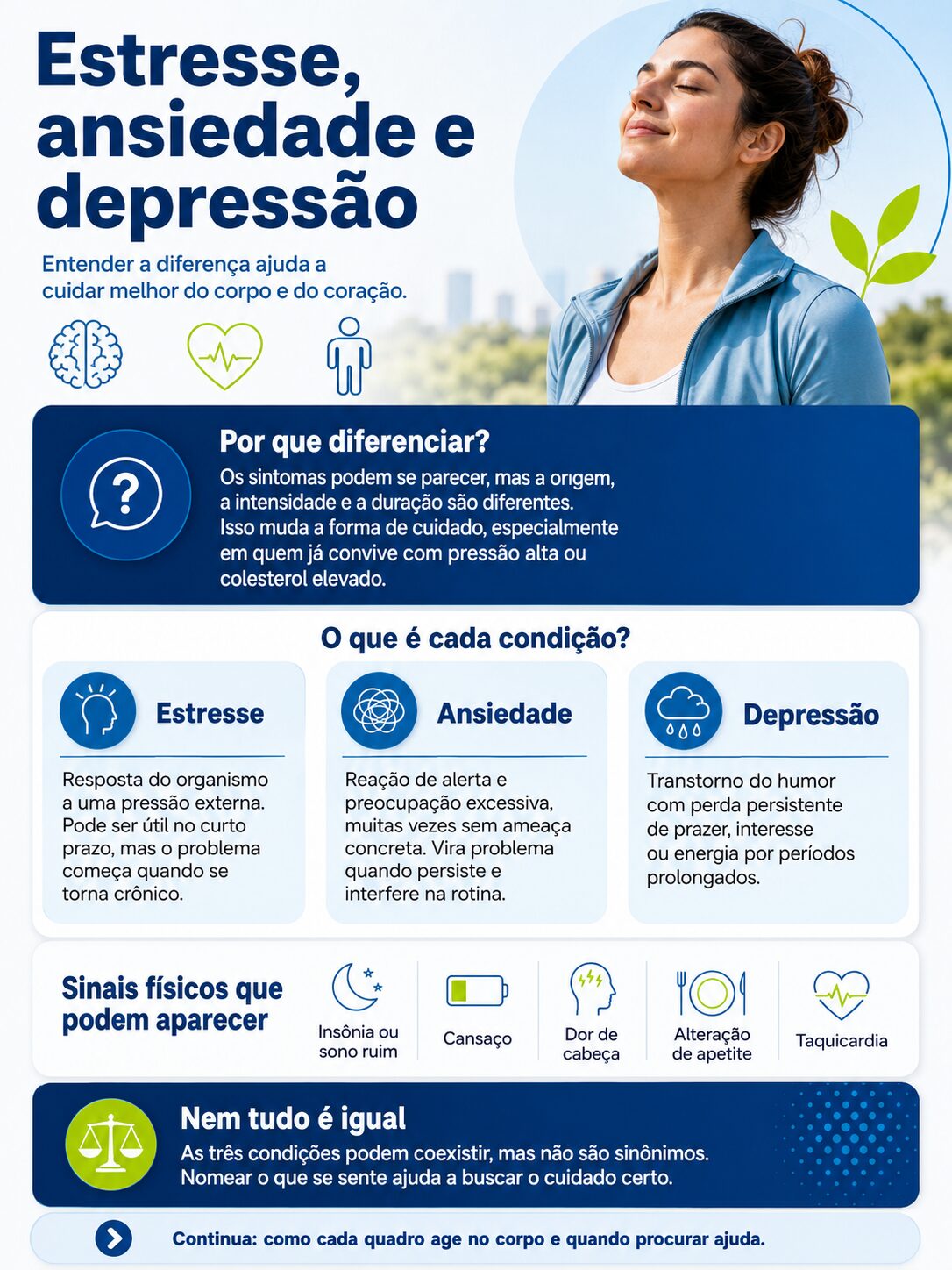
They are not the same thing: differences between stress, anxiety, and depression
Stress is the body’s response to a demand, pressure, or situation perceived as challenging, especially when the resources available to cope with them are considered insufficient. In specific situations, it can help a person react, stay focused, and solve problems. Greater caution is warranted when stress becomes prolonged, frequent, or is accompanied by disruptions to sleep, mood, eating habits, and daily routines.
Anxiety involves fear, worry, or a sense of alertness. According to the World Health Organization, anxiety disorders are characterized by excessive fear and worry, accompanied by behavioral changes and significant distress or impairment in daily functioning. In 2021, the WHO estimated that 359 million people worldwide were living with anxiety disorders.
Depression is different from temporary sadness. According to the WHO, during a depressive episode, a person experiences a depressed mood or a loss of interest and pleasure for most of the day, nearly every day, for at least two weeks. This condition can affect relationships, work, self-care, sleep, energy levels, and physical health.
These three conditions can coexist. They can also cause similar symptoms, such as fatigue, insomnia, irritability, changes in appetite, headaches, palpitations, or difficulty concentrating. For this reason, a professional evaluation is important to understand the origin, duration, intensity, and impact of these symptoms.
What Is Stress and How Does It Manifest in the Body?
Stress usually has a more identifiable trigger: pressure at work, a financial problem, a family argument, a major change, or a series of worries. Once the episode passes, the body tends to regain its balance. The problem arises when there is no time to recover or when the state of alertness becomes constant.
Studies on stress and the cardiovascular system indicate that situations of mental stress can trigger responses in the autonomic nervous system and affect heart rate, blood pressure, and circulation. For people with hypertension or other risk factors, this is an issue that warrants attention, especially when symptoms are recurrent or accompanied by a worsening of clinical indicators.
Signs that may appear during periods of stress include muscle tension, headaches, digestive discomfort, restless sleep, irritability, difficulty concentrating, and feelings of fatigue. These signs alone do not confirm a mental health or cardiovascular problem, but they help indicate that the body may be responding to stress.
For those who are already managing their blood pressure or cholesterol, it’s worth noting whether stress has become a constant factor, whether it’s interfering with sleep, whether it’s leading to less healthy habits, or whether it’s making it difficult to maintain their self-care routine. In such cases, talking to a healthcare professional can help assess the situation more accurately.
Anxiety: When Worry Begins to Disrupt Your Routine
Feeling anxious before a test, an important meeting, or a difficult decision is a common reaction. It becomes a cause for concern when it is frequent, intense, out of proportion to the situation, or when it begins to limit a person’s life.
The World Health Organization describes anxiety disorders as conditions in which fear and worry are excessive and cause distress or functional impairment. Depending on the case, a person may avoid places, appointments, conversations, or situations out of fear of what might happen.
Physically, anxiety can manifest as palpitations, a tightness in the chest, shortness of breath, sweating, tremors, dry mouth, muscle tension, gastrointestinal discomfort, and difficulty sleeping. These symptoms may also have other causes, including cardiac ones. Therefore, chest pain, shortness of breath, fainting, persistent palpitations, or new symptoms should be evaluated by a healthcare professional.
The relationship with the heart must be handled with care. The American Heart Association It states that mental health and cardiovascular health are linked, and studies presented by the institution associate depression, anxiety, and stress with poorer cardiovascular health. However, this relationship does not mean that every physical symptom is caused by anxiety, nor that anxiety alone explains changes in blood pressure, cholesterol, or cardiovascular risk.
Depression: Signs That Go Beyond Sadness
Depression is not a lack of motivation, weakness, or ordinary sadness. According to the WHO, it is a condition that can involve a depressed mood, loss of interest or pleasure, changes in sleep and appetite, fatigue, difficulty concentrating, and persistent feelings of worthlessness or guilt.
The NHS, the United Kingdom’s national health service, also notes that the symptoms of depression can vary widely from person to person. In addition to sadness and loss of interest, symptoms may include irritability, low self-esteem, difficulty making decisions, lack of energy, sleep disturbances, unexplained pain, and withdrawal from social activities.
In men, some of the symptoms may be less obvious, with fewer signs of sadness and more signs of impatience. According to the National Institute of Mental Health (NIMH), in men, signs of depression may include irritability, anger, changes in energy levels, sleep disturbances, loss of interest, and social withdrawal. Therefore, depression does not always manifest solely as sadness. These signs do not confirm a diagnosis, but they warrant attention when they persist and affect work, relationships, or daily routines.
The WHO emphasizes that depression and physical health influence each other. People with chronic illnesses may face a greater emotional burden, and depressive symptoms can also make it difficult to take care of themselves, sleep, eat, exercise, and adhere to their healthcare regimen.
The Effects of Emotions on the Heart
The relationship between mental health and cardiovascular health should not be treated as a metaphor or a foregone conclusion. It involves behaviors, sleep, lifestyle habits, stress response, adherence to treatment, and physiological mechanisms that are still being studied.
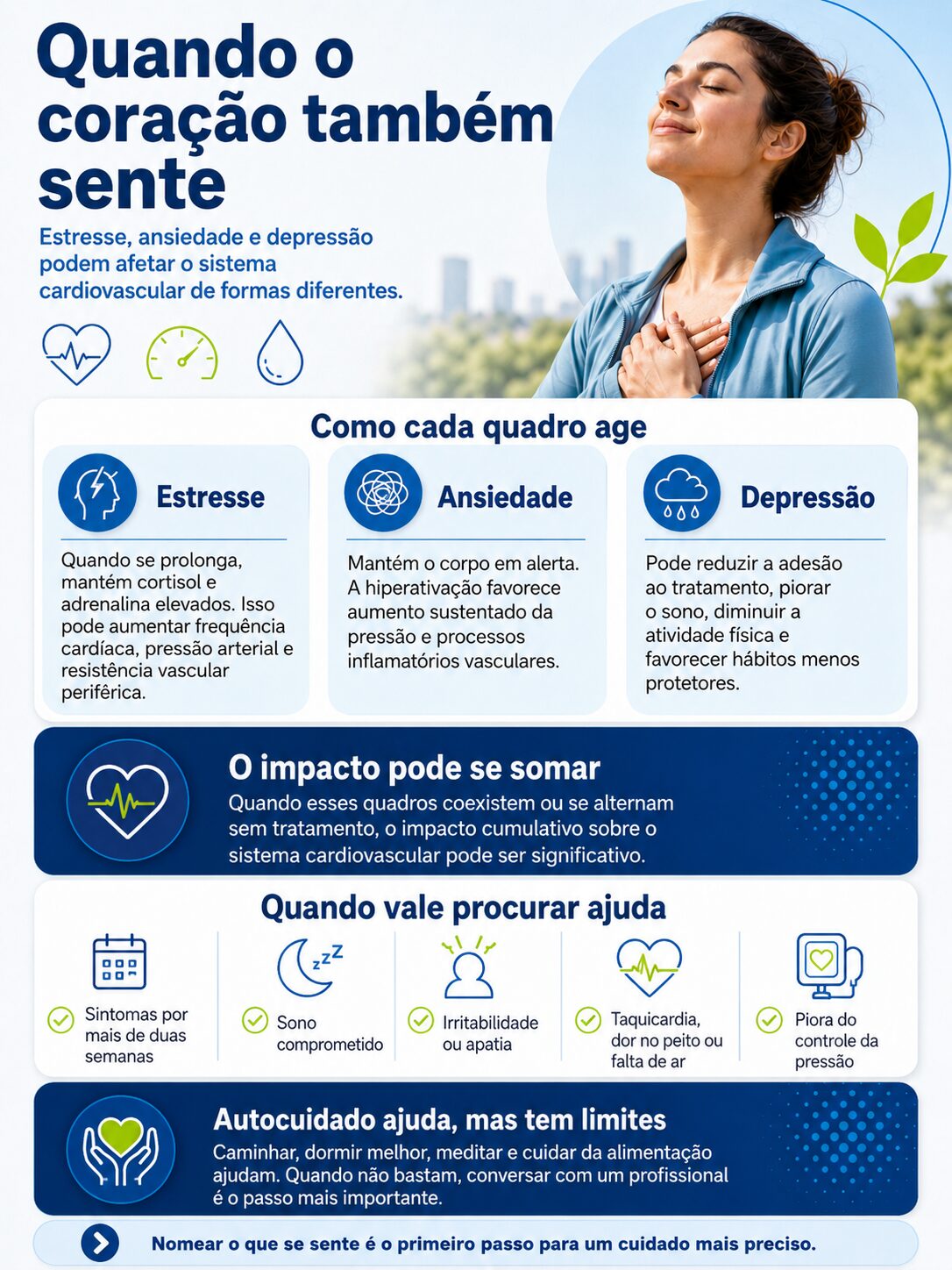
In situations of persistent stress, the body may remain in a state of alert for longer periods. This can affect heart rate, blood pressure, sleep, and day-to-day decisions. In people with high blood pressure, high cholesterol, or other risk factors, these effects can compound a condition that already requires regular monitoring.
With anxiety, symptoms such as palpitations, chest tightness, and shortness of breath can be alarming because they resemble heart-related symptoms. The safest approach is not to try to decide on your own whether “it’s anxiety” or “it’s a heart problem.” Severe, new, persistent, or symptoms associated with significant discomfort require evaluation.
With depression, the impact may manifest in other ways: less energy to be active, poorer sleep, greater difficulty keeping medical appointments, less regular eating habits, and lower adherence to treatment. According to the WHO, depression can worsen a person’s quality of life and be linked to factors that also affect chronic diseases.
That’s why taking care of one’s mental health is also part of a broader approach to cardiovascular care. It does not replace doctor’s visits, medical tests, prescribed medications, or monitoring blood pressure and cholesterol levels. But it can help people better understand their own bodies and maintain a more consistent self-care routine.
Self-care helps, but it has its limits
Walking, sleeping better, staying in touch with people you trust, cutting back on alcohol, organizing your daily routine, and practicing relaxation techniques can contribute to your well-being. The WHO recognizes that self-care plays an important role in managing depressive symptoms and promoting well-being. But there are situations in which these measures are not enough.
The NHS recommends seeking professional help when symptoms of depression persist for most of the day, nearly every day, for more than two weeks. This timeframe can help readers avoid normalizing persistent distress.
It’s also worth seeking an evaluation when sleep is consistently disrupted, when irritability or apathy is affecting work and relationships, when a person begins to avoid important situations, when blood pressure control worsens without a clear explanation, or when physical symptoms such as chest pain, shortness of breath, dizziness, or palpitations occur intensely, persistently, or in a way that is out of the ordinary.
In Brazil, the Ministry of Health reports that the Psychosocial Care Network brings together SUS services for mental health care. The Psychosocial Care Centers (CAPS) are public services open to the community that provide care for people experiencing severe psychological distress and support their day-to-day care. Primary care can also serve as a gateway to assessment and referral.
Putting your feelings into words isn’t a sign of weakness. It’s a way to start the right conversation with the right professional at the right time. For those who already manage their blood pressure, cholesterol, or other risk factors, taking mental health seriously is also part of taking care of your whole body.