













Women's Health Throughout Life: What Changes at Each Stage and How to Take Care of Yourself with Quality Information
Women’s health changes throughout their lives. Puberty, menstrual cycles, sexual and reproductive health, pregnancy, the postpartum period, perimenopause, menopause, and aging each present different needs in terms of care, prevention, and monitoring. For this reason, the health priorities of a teenage girl are not exactly the same as those of a woman in her prime.
According to the Ministry of Health, the National Policy on Comprehensive Women’s Health Care (PNAISM) aims to provide comprehensive care for women’s health and promote their autonomy. This vision is important because women’s health is not limited to pregnancy, motherhood, or the reproductive years: it encompasses prevention, rights, access to information, clinical care, sexual and reproductive health, mental health, and lifelong support.
This guide outlines the main stages of women’s health, explains common changes at each stage, and highlights care options that can be discussed with healthcare professionals. The goal is not to recommend specific tests or treatments for all women, but to help organize reliable information to facilitate a more informed conversation during a medical appointment.
Why Think of Women's Health as an Ongoing Journey
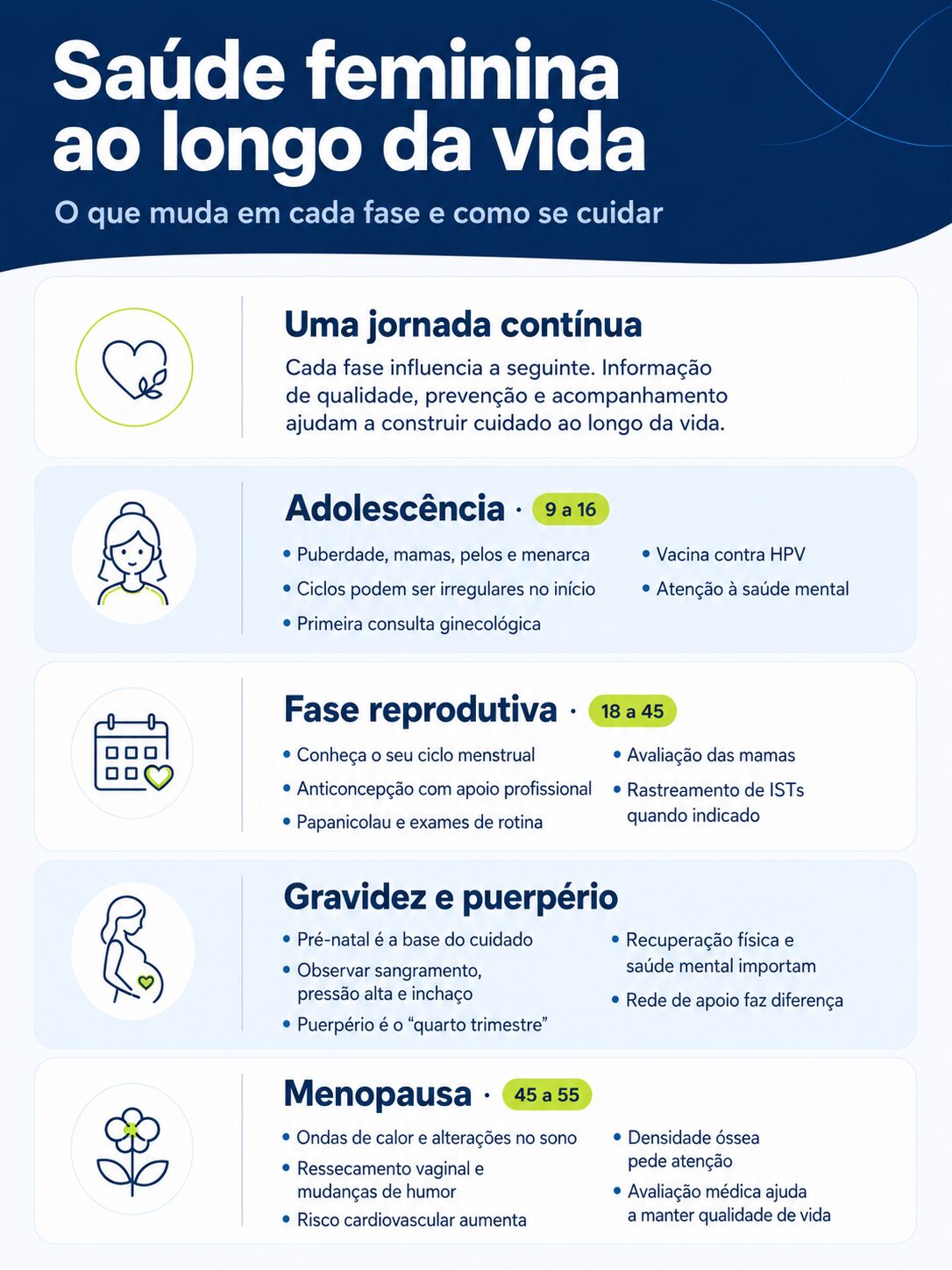
Thinking of women’s health as a continuous journey means recognizing that each phase influences the next. Habits, vaccinations, screenings, family history, reproductive experiences, chronic conditions, access to care, and decisions made throughout life can all affect care needs.
The Ministry of Health’s PNAISM promotes a comprehensive approach that takes into account different life stages and women’s autonomy. This perspective helps prevent fragmented care based solely on isolated symptoms.
High-quality information is no substitute for a doctor’s visit, but it helps women recognize changes in their own bodies, describe their symptoms more clearly, and participate in decisions about their health. In practice, this means arriving at the appointment knowing what questions to ask, what symptoms to look out for, and what preventive measures can be discussed based on age, medical history, and risk factors.
Adolescence: Early Hormonal Changes and the Start of Self-Care
Adolescence is a phase marked by physical, hormonal, and emotional changes. Puberty may include breast development, body hair growth, skin changes, changes in body composition, and the onset of menstruation, known as menarche. The age at which these changes occur varies from person to person.
In the first few years after menarche, menstrual cycles may be irregular. This may be part of the maturation of the hormonal axis, but severe symptoms, very heavy bleeding, debilitating pain, or the absence of a first menstrual period at a later age warrant professional evaluation (American College of Obstetricians & Gynecologists – ACOG).
Consultations with a healthcare professional during adolescence can serve an educational purpose. They can cover topics such as the menstrual cycle, hygiene, vaccinations, prevention of sexually transmitted infections, mental health, questions about the body, and—when appropriate—sexuality and contraception. It is not necessary to wait until a serious problem arises to seek guidance.
HPV vaccination is also an important preventive measure. In 2024, the Ministry of Health adopted a single-dose HPV vaccination schedule for the target population defined by the National Immunization Program, as a strategy to expand protection against cervical cancer and other complications associated with the virus.
Mental health also deserves attention. Physical changes, social pressure, social media use, insecurities, and experiences of violence or discrimination can affect well-being. Persistent changes in mood, sleep, appetite, energy levels, or behavior should be addressed and evaluated.
Reproductive Years: Menstrual Cycle, Contraception, and Life Planning
During a woman’s reproductive years, the menstrual cycle, contraception, family planning, and the prevention of sexually transmitted infections tend to be discussed more frequently during appointments. Even so, needs vary widely: one woman may want to become pregnant, another may want to avoid pregnancy, and yet another may be seeking help for severe cramps, irregular bleeding, or cycle-related symptoms.
Understanding your own cycle helps you recognize changes. Paying attention to the interval between periods, the duration of bleeding, the heaviness of the flow, pain, premenstrual symptoms, and any deviations from your usual pattern can provide useful information to your healthcare provider.
Mild cramping or discomfort around the time of menstruation may occur. However, severe pain, very heavy bleeding, bleeding outside the menstrual period, unexplained absence of menstruation, pain during sexual intercourse, or symptoms that interfere with school, work, or daily routine should not be considered normal (ACOG).
The choice of a contraceptive method should take into account health conditions, personal and family history, medication use, preference for hormonal or non-hormonal methods, reproductive plans, and the need for protection against sexually transmitted infections. The Ministry of Health includes access to contraceptive methods among its sexual and reproductive health strategies. The decision should be made in consultation with a qualified healthcare professional.
Preventive Exams and Screenings
Not every test is appropriate for every woman, regardless of age. Screening should be based on protocols, age, medical history, risk factors, and professional guidance.
For cervical cancer, the Ministry of Health states that the cytological test, known as the Pap smear, is recommended for women aged 25 to 64 who are sexually active. Initially, the test should be performed once a year, and after two consecutive normal results, it should be performed every three years, according to official guidelines.
For breast cancer, INCA recommends mammography screening for women aged 50 to 69 every two years. Women with breast symptoms, a relevant family history, or other risk factors may require an individualized assessment, as determined by a healthcare professional.
Blood tests, thyroid evaluation, blood glucose testing, cholesterol testing, screening for sexually transmitted infections, and other tests may be recommended based on age, symptoms, medical history, and clinical evaluation. It is safest to avoid one-size-fits-all checklists and discuss the frequency of testing with the healthcare professional managing your case.
Pregnancy and the Postpartum Period: Care Before and After Childbirth
Pregnancy requires regular monitoring. Prenatal care allows for the assessment of the health of the expectant mother and the baby, monitoring of blood pressure, laboratory tests, fetal growth, vaccinations, nutrition, supplementation when indicated, and signs that require attention.
The PNAISM emphasizes the importance of care during pregnancy, childbirth, and the postpartum period as part of comprehensive women’s health care. This care includes clinical follow-up, childbirth preparation, breastfeeding guidance, emotional support, and the prevention of complications.
During the postpartum period, the body continues to adapt. Postpartum bleeding, recovery from a cesarean section or lacerations, changes in the breasts, sleep deprivation, hormonal changes, and emotional adjustment may occur. These symptoms should be monitored, especially when they are severe, persistent, or accompanied by fever, significant pain, foul-smelling discharge, progressive worsening, or emotional distress.
Mental health also deserves attention. The WHO notes that mental disorders during the perinatal period—particularly depression—can occur during pregnancy and after childbirth. Intense sadness, persistent anxiety, significant difficulty bonding, feelings of helplessness, marked changes in sleep and appetite, or emotional distress that does not improve should prompt a person to seek professional help.
The choice of a postpartum contraceptive method should also be discussed with your doctor or healthcare team, as breastfeeding, risk of thrombosis, type of delivery, time since birth, and personal preferences can influence the recommendation.
Menopause, Menopausal Transition, and Maturity
Natural menopause is defined by the World Health Organization as 12 consecutive months without menstruation, with no other physiological or pathological cause or clinical intervention. The transitional period leading up to menopause can last for years and is called the climacteric or menopausal transition.
Symptoms vary widely. Some women experience few discomforts; others have hot flashes, night sweats, sleep disturbances, vaginal dryness, pain during sexual intercourse, mood swings, difficulty concentrating, or changes in their menstrual cycle during menopause.
Menopause should not be treated as a disease, but rather as a phase that may require monitoring. Hormonal changes may be related to bone health, metabolism, urogenital symptoms, and cardiovascular risk. Therefore, monitoring blood pressure, blood glucose, cholesterol, breast health, bone health, and quality of life may be important, depending on age and risk factors.
Hormone therapy may be considered for some symptoms of perimenopause and menopause, but it is not a one-size-fits-all decision. The recommendation depends on an individual assessment of benefits, risks, personal history, age, time since menopause, contraindications, and the woman’s preferences. This decision should be made under a doctor’s supervision.
Bone Health and Cancer Prevention: Care That Spans Life Stages
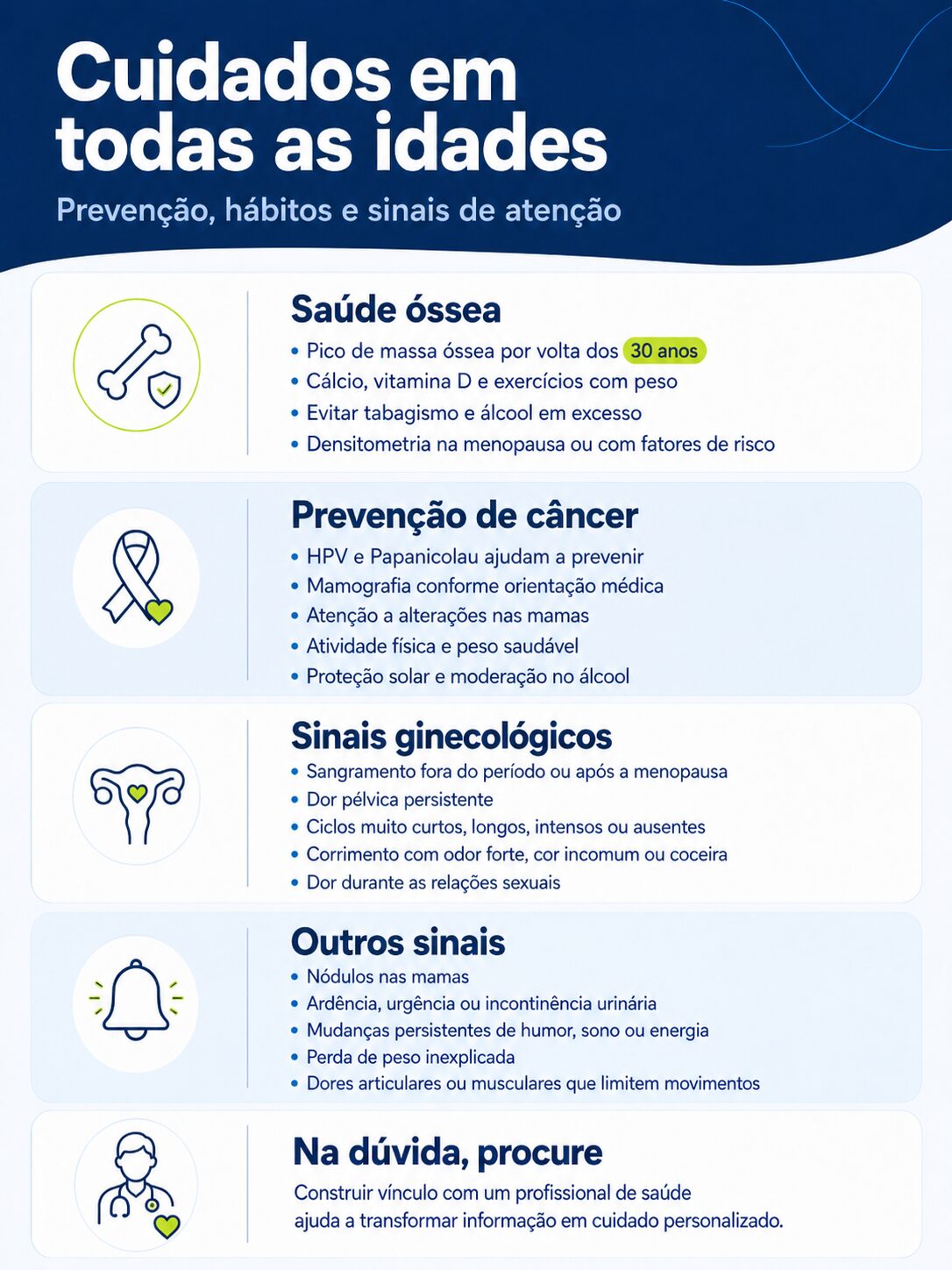
Bone health is built up over a lifetime. The NIH Office of Dietary Supplements notes that menopause can lead to bone loss due to a decrease in estrogen production, which affects calcium absorption and loss. Therefore, proper nutrition, physical activity, safe sun exposure, vitamin D testing when indicated, and assessment of risk factors are all part of preventive care.
Calcium or vitamin D supplements should not be used as a general rule for all women. The need for them should be assessed by a healthcare professional, taking into account diet, test results, age, risk of osteoporosis, and medical conditions.
In cancer prevention, two areas deserve special attention in women’s health: cervical cancer and breast cancer. For cervical cancer, HPV vaccination and Pap smears, performed according to the recommended age groups and frequency, are key strategies. For breast cancer, screening mammograms should follow the recommendations of INCA and the Ministry of Health, in addition to individual assessment in cases of symptoms or risk factors.
It is also important to be aware of changes in the breasts. Lumps, retraction, nipple discharge, skin changes, or persistent changes should be evaluated, regardless of age.
When to See a Healthcare Professional
Throughout life, certain signs warrant evaluation. They do not necessarily indicate illness, but they do suggest that a woman should not try to handle everything on her own or rely solely on information found online.
Seek professional guidance if you are facing:
• Vaginal bleeding outside of the menstrual period, after sexual intercourse, or after menopause.
• Pelvic pain that is persistent or worsens over time.
• Very irregular periods, very heavy periods, missed periods, or periods accompanied by significant symptoms.
• Severe cramps.
• Vaginal discharge with a strong odor, a change in color, severe itching, or pain.
• Pain during sexual intercourse.
• Lumps or changes in the breasts.
• Recurrent urinary symptoms, such as a burning sensation, urgency, or incontinence.
• Hot flashes, insomnia, vaginal dryness, or mood swings that impair quality of life.
• Unexplained weight loss.
• Persistent fatigue, changes in mood, sleep, appetite, or energy levels.
• Bone, joint, or muscle pain that limits daily activities.
Building a relationship with a gynecologist, family doctor, general practitioner, or other healthcare professionals helps you track changes over time. Quality information prepares you for your appointment, but it is during the appointment that this information is transformed into personalized care.
Frequently Asked Questions About Women's Health Throughout the Lifespan
At what age should I start seeing a gynecologist?
A consultation may be recommended during adolescence for guidance on puberty, the menstrual cycle, vaccinations, hygiene, and questions about the body and sexual health. The exact age depends on symptoms, concerns, the onset of sexual activity, and guidance from the family or healthcare team. Severe pain, heavy bleeding, a delayed first menstrual period, or any relevant concerns warrant an evaluation.
Is an irregular menstrual cycle always a sign of a problem?
No. In the first few years after menarche, irregular periods may occur. In adulthood, persistent irregularities, very heavy bleeding, unexplained absence of menstruation, significant pain, or changes from the usual pattern should be evaluated.
What preventive screenings can be discussed?
Screening tests depend on age, medical history, symptoms, and risk factors. A Pap smear is recommended for women aged 25 to 64 who are sexually active, according to official guidelines. Screening mammograms are recommended by INCA for women aged 50 to 69 every two years. Other tests should be determined during a consultation.
When does menopause begin?
The WHO defines natural menopause as 12 consecutive months without menstruation, with no other apparent cause. It usually occurs in middle age, but the age at which it occurs varies. The transition period can begin years earlier and cause symptoms such as hot flashes, sleep disturbances, and vaginal dryness.
Is bone health only a concern after menopause?
No. Bone health is built up over a lifetime. A healthy diet, physical activity, avoiding smoking, moderate alcohol consumption, and assessing risk factors all help protect your bones. After menopause, bone loss can accelerate, which is why this issue becomes even more important.
How do I know if I should see a doctor or if the symptom is normal?
If in doubt, seek guidance. Persistent, severe, recurrent, or unusual symptoms warrant evaluation. This applies to bleeding, pain, changes in the breasts, emotional changes, urinary symptoms, discomfort during sexual intercourse, and signs that impair your quality of life.
The Viver Bem Blog, a publishing initiative by Biolab & Co, offers accessible and evidence-based information on health and well-being. Each post is designed to support your healthcare journey, without replacing medical advice. Quality information should not instill fear; rather, it should help you ask better questions and seek care at the right time.