













Birth Control Methods: Types, How They Work, and What to Consider Before Talking to Your Doctor
Choosing a contraceptive method shouldn’t be a decision made in the dark. There are different options, each with its own method of use, duration, mechanism of action, and specific care requirements. Therefore, the most appropriate method may vary depending on age, health history, daily routine, reproductive plans, personal preference, and professional guidance.
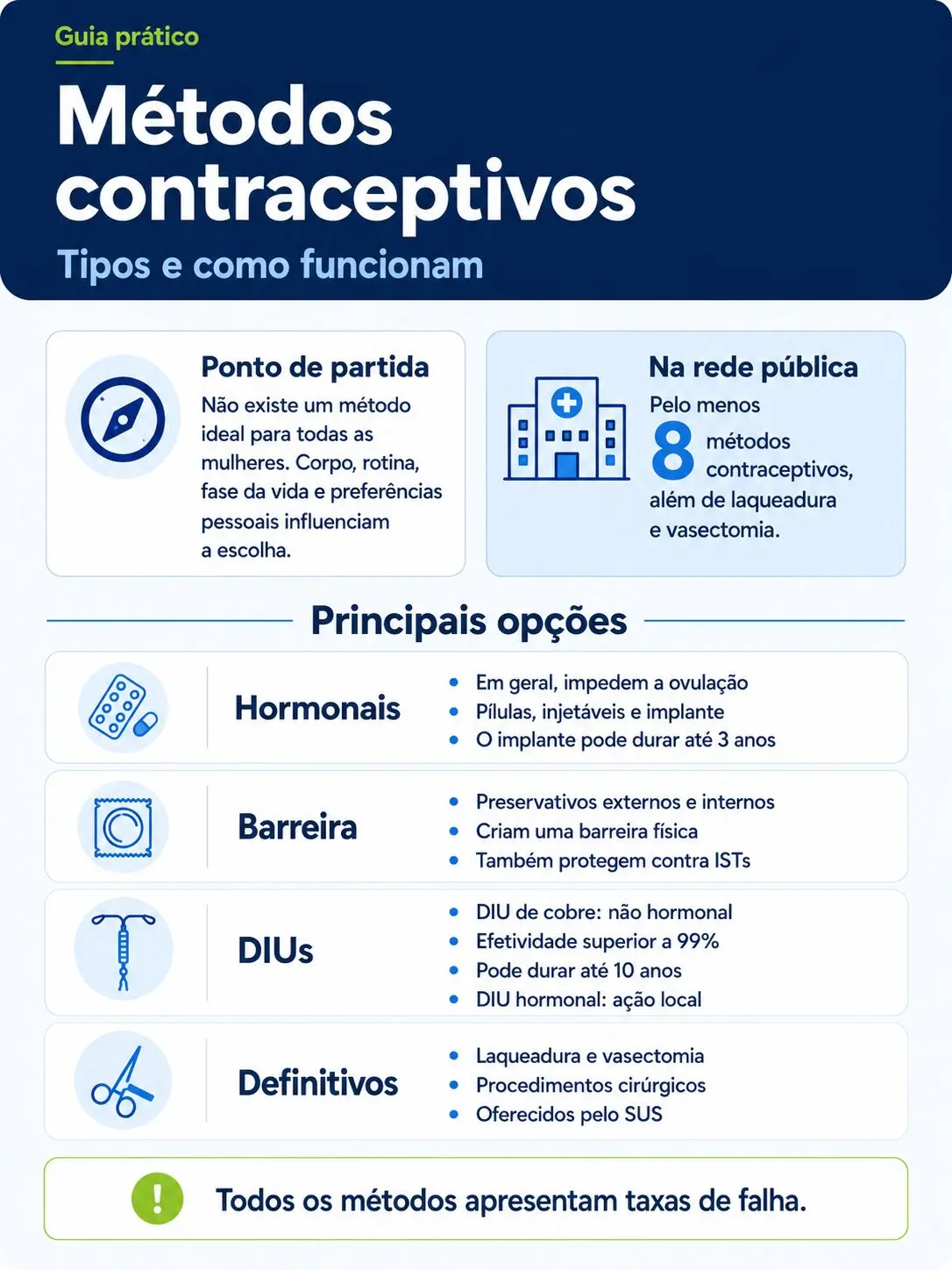
In Brazil, the Ministry of Health reports that the public health system provides methods such as copper IUDs, combined oral contraceptives, progestin-only pills, injectable contraceptives, emergency oral contraception, internal and external condoms, and subdermal implants, as well as permanent procedures such as tubal ligation and vasectomy. Availability may vary depending on the organization of the local healthcare system and care protocols.
This guide explains, in simple terms, the main types of birth control methods, how they generally work, and what points you might want to bring up during a conversation with your doctor or another qualified healthcare professional. The goal is not to recommend a specific method, but to help you go into your appointment better informed and with clearer questions.
Why You Should Understand Contraceptive Methods Before Choosing One
Contraception is part of sexual and reproductive rights. According to the Ministry of Health, ensuring access to contraception promotes autonomy, freedom, and decision-making free from threats or discrimination.
But access isn't just about having the method available. It also means understanding the options. When a person knows the difference between a hormonal and a non-hormonal method, between a short-term and a long-term method, or between pregnancy prevention and protection against sexually transmitted infections, the conversation with the healthcare provider tends to be more productive.
No contraceptive method is 100% effective. Even highly effective methods or permanent procedures carry a risk of failure, albeit a rare one. For this reason, the Ministry of Health recommends that the choice take into account personal characteristics, health conditions, and preferences, with guidance from qualified professionals.
Hormonal Methods: How They Work and What Types Are Available
Hormonal methods use synthetic hormones, such as estrogen and/or progestin. They can work in different ways: by preventing ovulation, making it difficult for sperm to pass through the cervical mucus, and/or by altering the uterine environment. The specific mechanism depends on the type of method and the formulation.
Combined oral contraceptive
The combined pill contains estrogen and progestin. In general, its main mechanism of action is to prevent ovulation. Its effectiveness depends heavily on correct and consistent use. According to data used by the Ministry of Health, there is a difference between ideal use and actual use, which highlights the importance of taking the medication as directed.
Since this method requires daily use, it may work best for people with a regular routine or who are able to set reliable reminders. Forgetfulness, vomiting, diarrhea, and interactions with certain medications can interfere with its use, so any questions should be discussed with a doctor or pharmacist.
Progestin-only pill
The progestin-only pill, also known as the minipill, contains only progestin. It works primarily by thickening the cervical mucus, which makes it harder for sperm to pass through, and in some formulations, it can also inhibit ovulation.
It may be considered in situations where estrogen-based methods are not recommended, but this assessment depends on the patient’s medical history, stage of life, and clinical guidelines.
Injectable contraceptives
Injectable contraceptives can be combined, administered monthly, or contain progestin only, with administration every three months. The practical advantage is that they do not require daily administration, but they still require keeping track of dates and returning to the health clinic or pharmacy at the correct time.
Like any hormonal method, it may have unwanted side effects and contraindications. Therefore, it should be chosen with professional guidance, especially in people with cardiovascular risk factors, migraine with aura, a history of thrombosis, smoking, or other relevant medical conditions.
Subdermal implant
The subdermal implant is a small rod inserted under the skin of the arm by a licensed professional. It releases hormones continuously and is long-lasting. According to the Ministry of Health, the subdermal implant is one of the contraceptive methods available through the public health system.
This method does not require daily action on the part of the user, but it must be inserted and removed by a trained professional. It can also alter the menstrual pattern, which should be explained before the user makes her choice. The time at which contraceptive protection begins may vary depending on the stage of the cycle and the instructions provided during the consultation.
Barrier and behavioral methods
Internal and external condoms
Condoms create a physical barrier that helps prevent contact between sperm and the egg. In addition to preventing pregnancy, they play an important role in protecting against sexually transmitted infections.
The CDC notes that most contraceptive methods do not protect against STIs, including HIV, and that condoms can help provide this protection when used correctly. Therefore, even when a person uses the pill, an IUD, an implant, or another contraceptive method, condoms remain part of a safe sex strategy.
Behavioral methods
Behavioral methods rely on observing the menstrual cycle and bodily signs, such as cervical mucus and basal body temperature, to estimate the fertile window. They do not use hormones or devices, but they depend on regularity, careful record-keeping, and correct use.
These methods tend to have a higher risk of failure when used routinely, especially when cycles are irregular, tracking is difficult, or it is impossible to avoid unprotected sex during the fertile window. For this reason, they should be discussed with a healthcare professional before being adopted as the primary method.
Intrauterine devices and long-acting methods
Copper IUD
The copper IUD is a nonhormonal, long-acting intrauterine method. According to the Ministry of Health, it is highly effective—with an effectiveness rate of over 99%—can last up to 10 years, is reversible, is available through the SUS, and can be removed at any time.
The Ministry of Health also states that the copper IUD is not an abortifacient, does not cause infertility, and does not cause pelvic inflammatory disease. Its mechanism of action occurs before fertilization, primarily through the local effect of copper, which impairs sperm function.
Even so, the decision to use an IUD should be made after a professional evaluation. It is important to consider medical history, the possibility of pregnancy at the time of insertion, gynecological symptoms, personal preference, and guidance regarding possible changes in menstrual patterns.
Hormonal IUD
The hormonal IUD is also inserted into the uterus by a qualified healthcare professional, but it releases progestin locally. It is a long-acting method and does not require daily use. Its duration, expected effects, contraindications, and availability should be discussed during a consultation.
Because the hormonal IUD can alter menstrual patterns and does not protect against STIs, it is important to discuss expectations, possible side effects, and the need for condoms based on the person’s sexual situation.
Permanent methods: tubal ligation and vasectomy
Tubal ligation and vasectomy are surgical methods of voluntary sterilization. They are considered permanent, although no contraceptive method can be considered absolutely foolproof.
Law No. 14,443/2022 amended the rules governing voluntary sterilization in Brazil. According to the Ministry of Health, the minimum age has been raised to 21 for individuals with full legal capacity, and consent from a spouse or partner is no longer required. The law also establishes a minimum waiting period of 60 days between the expression of intent and the procedure.
These methods require a well-informed decision. Because they are intended for people who do not wish to become pregnant or have children in the future, they should be discussed with healthcare professionals, taking into account legal criteria, personal history, reproductive desires, and the possibility of regret.
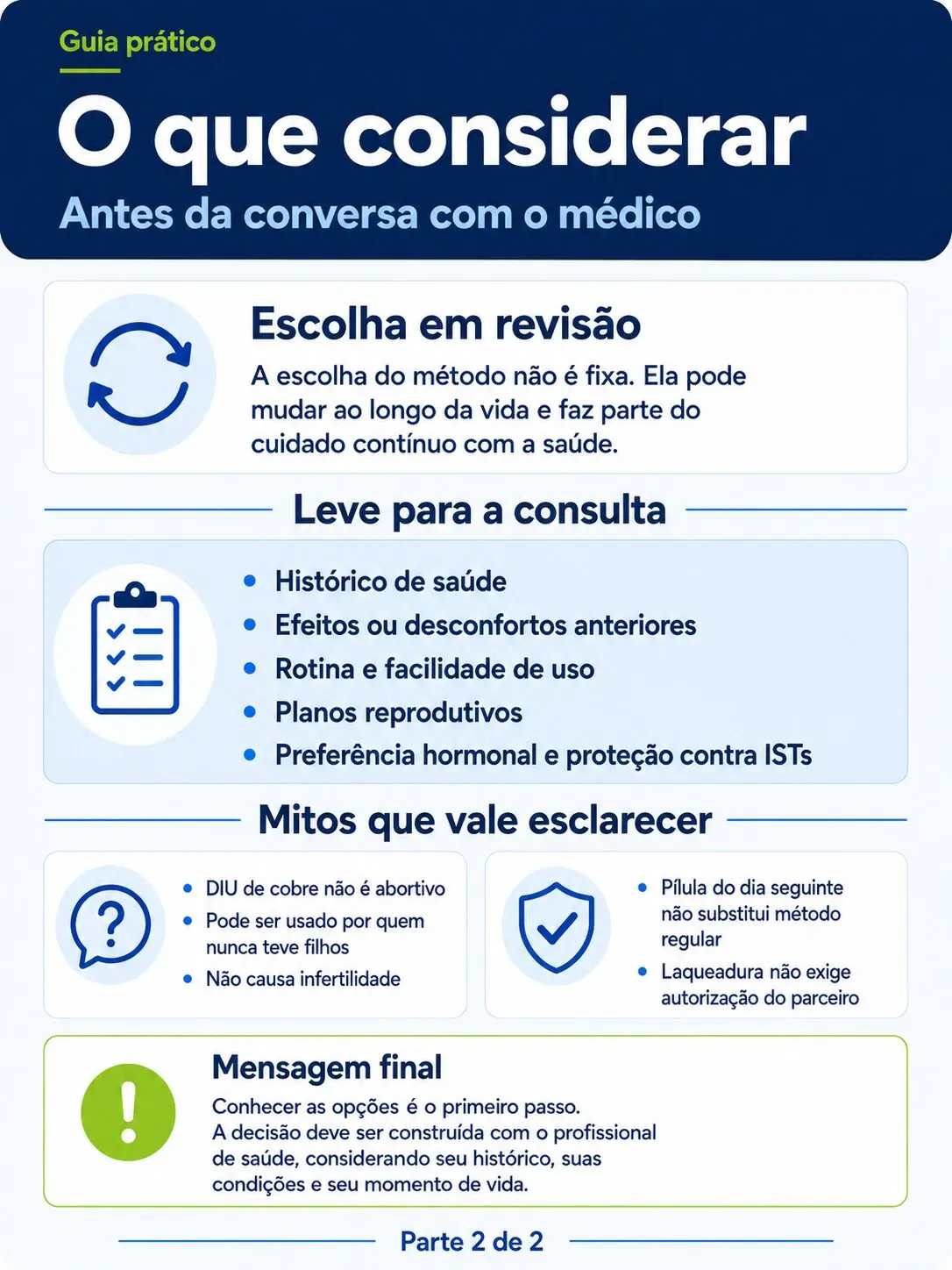
Points to consider when talking to your doctor
Before your appointment, it may be helpful to gather some information:
• Medical history, including hypertension, migraine with aura, thrombosis, smoking, diabetes, liver disease, breast cancer, or other relevant conditions.
• Medications currently being taken, including anticonvulsants, specific antibiotics, herbal remedies, or other products that may interact with contraceptives.
• Previous experiences with contraceptive methods, including side effects, missed doses, bleeding, or discomfort.
• Routine and ease of use, because daily methods require more consistency than long-acting methods.
• Reproductive plans, such as the desire to become pregnant in the short, medium, or long term.
• Preference for a hormonal or non-hormonal method.
• The need for protection against STIs, especially when there are new partners or non-exclusive relationships.
This information is not intended to help you choose a method on your own, but to make your consultation more objective and safe.
What to Consider at Different Stages of Life
Your choice of birth control method may change over the course of your life. This is to be expected. Changes in your daily routine, your relationship, your health, your desire to become pregnant, or your tolerance for side effects may warrant a new discussion with your healthcare provider.
During adolescence and early sexual activity, protection against STIs plays an important role, and condoms should be discussed as part of sexual health care. Other methods may also be considered, based on a professional assessment.
After childbirth and during breastfeeding, the choice requires special attention. Some hormonal methods, especially those containing estrogen, may not be appropriate during certain periods or in certain situations. Therefore, guidance should be tailored to each individual.
For people who have completed their family planning, long-term methods or permanent procedures may be discussed, always in accordance with legal criteria, personal wishes, and professional assessment.
Common Myths About Birth Control
“The copper IUD causes abortion.”
That is not the Ministry of Health’s definition. The ministry states that the copper IUD works before fertilization, hindering the movement of sperm.
“Only women who have already had children can have an IUD inserted.”
The Ministry of Health states that the copper IUD may be inserted in women who have not had children, provided that the possibility of pregnancy has been ruled out and a healthcare professional has recommended this method.
“Hormonal birth control always makes you gain weight.”
Some people may report changes in weight, but these should not be treated as a universal rule. The best approach is to discuss any perceived effects with your doctor to determine whether they are related to the method and whether it is worth considering alternatives.
“The morning-after pill replaces regular birth control.”
No. Emergency oral contraception is intended for specific situations, such as when a contraceptive method has failed or was not used. It is not a substitute for a regular method of pregnancy prevention.
“I need my partner’s consent to have a tubal ligation.”
No. Since the change introduced by Law No. 14,443/2022, consent from a spouse or partner is no longer required for tubal ligation or vasectomy.
Frequently Asked Questions About Contraceptive Methods
What are the main types of birth control methods?
These include hormonal methods, such as birth control pills, injections, and implants; barrier methods, such as condoms; intrauterine devices, such as copper IUDs and hormonal IUDs; behavioral methods; emergency contraception; and permanent methods, such as tubal ligation and vasectomy.
What is the difference between hormonal and non-hormonal methods?
Hormonal methods use estrogen and/or progestin to prevent ovulation or make fertilization more difficult. Nonhormonal methods, such as the copper IUD and condoms, work without hormones, through local, physical, or behavioral mechanisms.
Can the copper IUD cause infertility?
According to the Ministry of Health, the copper IUD does not cause infertility. After removal, fertility may return, but the time it takes to become pregnant varies from person to person and depends on other health factors.
Can I switch to a different method of birth control at different times in my life?
Yes. It may be necessary to review the method when there are changes in routine, reproductive plans, health, perceived effects, or personal preferences. Any change should be guided by a healthcare professional.
Do I need my partner's consent to have a tubal ligation?
No. Law No. 14,443/2022 eliminated the requirement for spousal consent for tubal ligation and vasectomy. However, there are legal criteria and a minimum waiting period between the expression of intent and the procedure.
What should I bring to my birth control appointment?
Bring information about your medical history, current medications, previous experiences with birth control, daily routine, reproductive plans, questions, preferences, and your need for protection against STIs.
Can the morning-after pill be used as a regular method of birth control?
No. It is an emergency contraceptive, intended for one-time use. For ongoing pregnancy prevention, talk to a healthcare professional about regular methods that are better suited to your situation.