












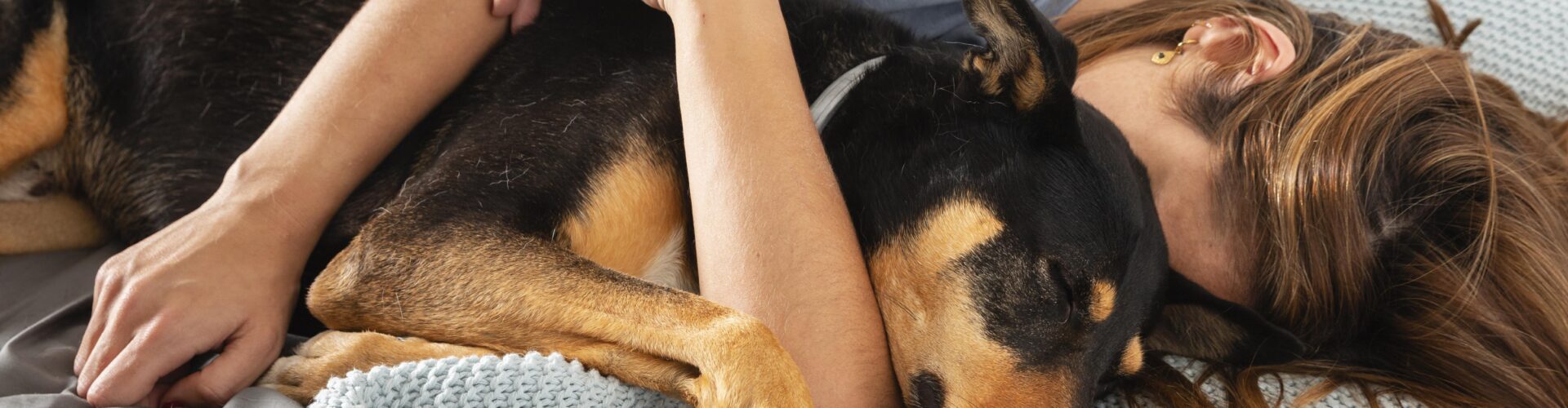

Yes, there will be a dog in the bed!
The habit of sharing a bed with pets is increasingly common, according to a Mayo Clinic study, 56% of the guardians interviewed sleep with their pets and 41% report that the presence of their pet helps reduce anxiety and brings a sense of well-being. "Sleep and its relationship with the health of owners and pets" was the topic covered in the most recent edition of Biolab Cast Conectados, a project run by Biolab Farmacêutica in partnership with Avert Biolab Saúde Animal.
The episode features Dr. Luiz Dieckmann, a psychiatrist, and Paula Dieckmann, a neurology specialist, as guests who understand everything about human and animal sleep: Professor Márcio Zanini, a psychiatrist, sleep medicine specialist and vice-coordinator of the Sleep Medicine Department of the Brazilian Psychiatry Association (ABP); and veterinarian Rita Ericson, founder of the TanatoVet group.
"After a good night's sleep, with adequate rest, those emotions that were negative the day before tend to be lessened," explains psychiatrist Márcio Zanini. "The individual with insomnia is in a hyper-alert state, in which they find it difficult to fall asleep or stay asleep, so this patient has to take sleep hygiene literally, with as little external stimuli as possible. A pet that sleeps together on the bed leads the guardian to have this fragmentation of sleep, so it's important that, in these cases, the animal sleeps far away," he warned.
Veterinarian Rita Ericson explained that pets such as dogs and cats have different rhythms to humans: while an adult dog can sleep between 15 and 18 hours a day, in short cycles of around 30 minutes, cats usually rest between 14 and 16 hours, in 20-minute intervals. This characteristic is due to the vigilant nature of animals which, even if domesticated, still carry the instinct to be alert to sounds and smells.
As they get older, pets can suffer from changes in their sleep, some developing a kind of cognitive dysfunction syndrome that disorganizes the sleep-wake cycle and can affect the rest of the house. "Although it's hard to tell when your pet hasn't had a good night's sleep because they don't have dark circles under their eyes, the effects of sleep deprivation are very similar to those of humans and it's essential to ensure that they get quality rest," says Rita Erickson.
And when it comes to sharing a bed with your pet, it's important to respect their space. Being close to the guardian at this time can transmit security and comfort to both the animal and the human, but movement during the night can interrupt the pet's rest, and in cases of pain or discomfort, they may even react. "If your pet likes to sleep in bed with you, that's good for both of you. The important thing is that it's their choice and not an imposition," concludes veterinarian Rita Erickson.
Check out the full article at the link: Yes, there will be a dog in the bed!