














The Cardiovascular System: How It Works, What Can Go Wrong, and Why Understanding It Helps You Take Better Care of Your Heart
Cardiovascular diseases remain among the leading causes of death in Brazil. According to the Ministry of Health’s Virtual Health Library, approximately 400,000 people died in the country in 2022 due to cardiovascular problems. This statistic helps illustrate the importance of the issue, but it should not be interpreted as a cause for alarm: prevention, timely diagnosis, and medical follow-up can make a difference in how each person takes care of their own health.
The cardiovascular system usually receives attention only when certain symptoms appear: high blood pressure, abnormal cholesterol levels, shortness of breath, chest pain, or test results outside the expected range. Understanding, in simple terms, how this system works helps you better interpret the advice you receive during a doctor’s visit and participate more effectively in decisions regarding prevention and care.
This content is intended for educational purposes. It explains the role of the heart, blood vessels, and blood; outlines cardiovascular risk factors; and shows why habits such as a balanced diet, physical activity, adequate sleep, and quitting smoking are associated with protecting the heart. This information is not a substitute for evaluation, diagnosis, or follow-up with a healthcare professional.
What is the cardiovascular system, and what is its function in the body?
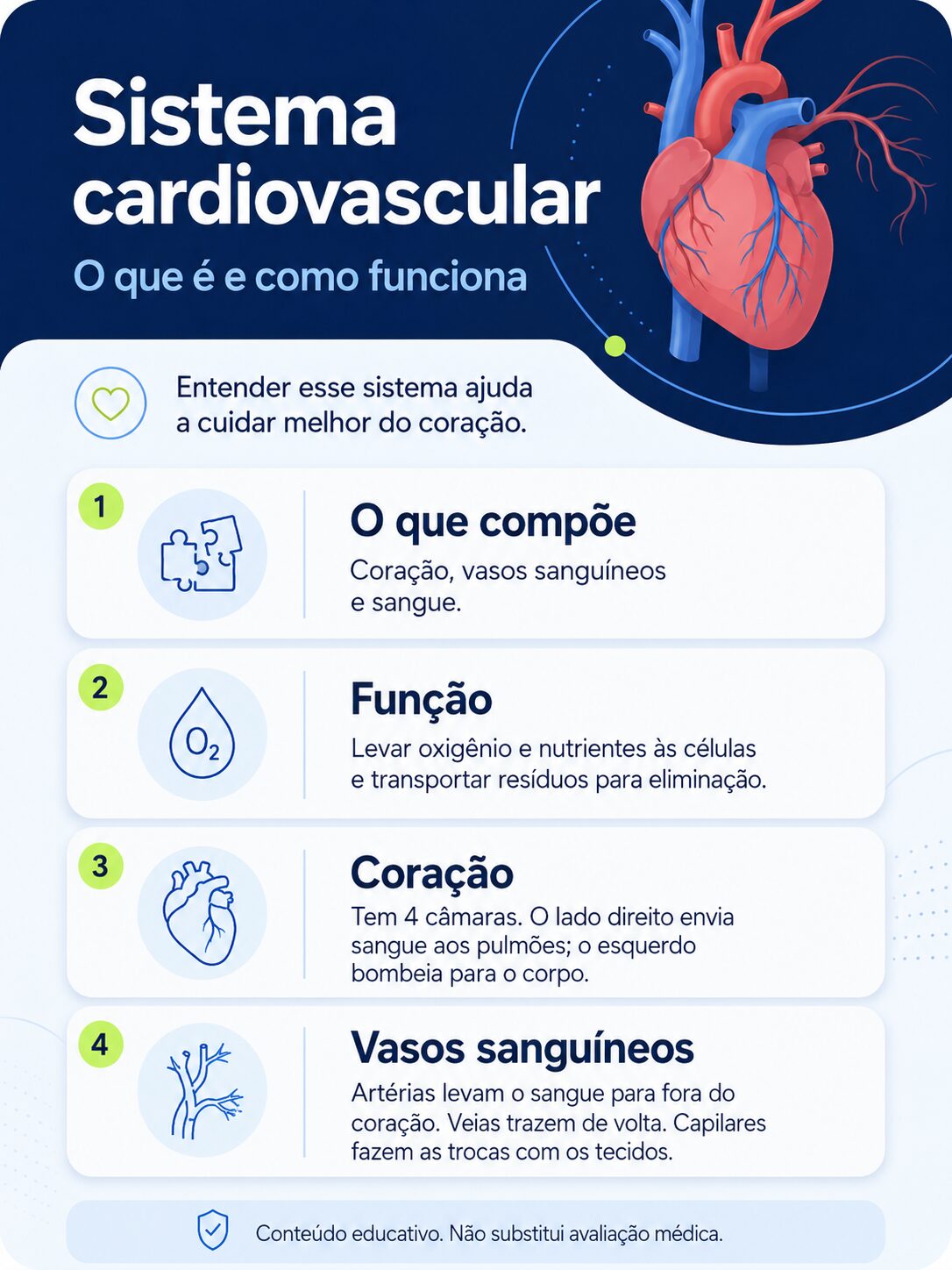
The cardiovascular system, also known as the circulatory system, consists of the heart, blood vessels, and blood. According to the NCBI/NIH, its function is to deliver oxygen and nutrients to the body’s cells and to transport waste products for elimination. Arteries carry blood away from the heart, while veins carry it back.
Simply put, the heart functions as a muscular pump. Blood vessels form the network through which blood circulates. Arteries, veins, and capillaries each play different roles in this process. The article “The cardiovascular system and associated disorders,” published in the British Journal of Nursing, describes this system as a network responsible for distributing blood throughout the body and maintaining tissue function.
When this system is in balance, blood delivers oxygen and nutrients to the organs and tissues. When there are persistent changes—such as high blood pressure, plaque buildup in the arteries, or difficulty with the heart’s pumping action—cardiovascular problems may arise that require medical evaluation.
Heart, arteries, veins, and capillaries: What is the role of each structure?
The heart is a muscle located in the chest and divided into four chambers: two atria and two ventricles. Generally speaking, the right side of the heart receives blood returning from the body and sends it to the lungs; the left side receives oxygenated blood from the lungs and pumps it to the rest of the body. This explanation is consistent with the description of cardiovascular anatomy and physiology presented by Wuche in the British Journal of Nursing.
Arteries are blood vessels that carry blood away from the heart. The largest of these is the aorta, which branches into smaller vessels to distribute blood throughout the body. Simply put, arteries carry blood away from the heart, while veins carry it back.
Veins carry blood back to the heart. Many of them have valves that help keep the blood flowing in the right direction, especially in the lower limbs. Changes in this venous return may be associated with problems such as varicose veins and, in some cases, deep vein thrombosis, which requires medical evaluation.
Capillaries are very small blood vessels responsible for the exchange of substances between the blood and tissues. It is in this region that oxygen and nutrients reach the cells and metabolic waste products are removed. For this reason, diseases that affect small blood vessels, such as hypertension and diabetes, can impact organs such as the kidneys, eyes, and peripheral nerves.
What Can Go Wrong: High Blood Pressure, High Cholesterol, and Other Signs
Blood pressure is the force that blood exerts on the walls of the arteries. According to the Brazilian Society of Cardiology’s Brazilian Guidelines on Hypertension, persistently high blood pressure readings should be evaluated by a healthcare professional, taking into account each person’s clinical context. Hypertension is often asymptomatic, and when left untreated, it can contribute to damage to the heart, brain, kidneys, and blood vessels.
Cholesterol is an important substance for the body, but high levels of LDL can contribute to the buildup of plaque in the arteries. According to the American Heart Association, LDL is often called “bad cholesterol” because it can build up in the arteries, narrow the blood vessels, and increase the risk of heart attack and stroke. HDL, on the other hand, plays a role in the reverse transport of cholesterol and is commonly known as “good cholesterol.”.
Other signs and changes also warrant attention, especially when they persist or occur alongside other symptoms. High triglycerides, abnormal blood sugar levels, chest pain, shortness of breath during physical exertion, and swelling in the legs can have various causes and do not, on their own, confirm a diagnosis. Nevertheless, they should be evaluated by a doctor for proper investigation.
You may also be interested in: Maintaining a healthy weight can reduce the strain on the heart.
Modifiable risk factors
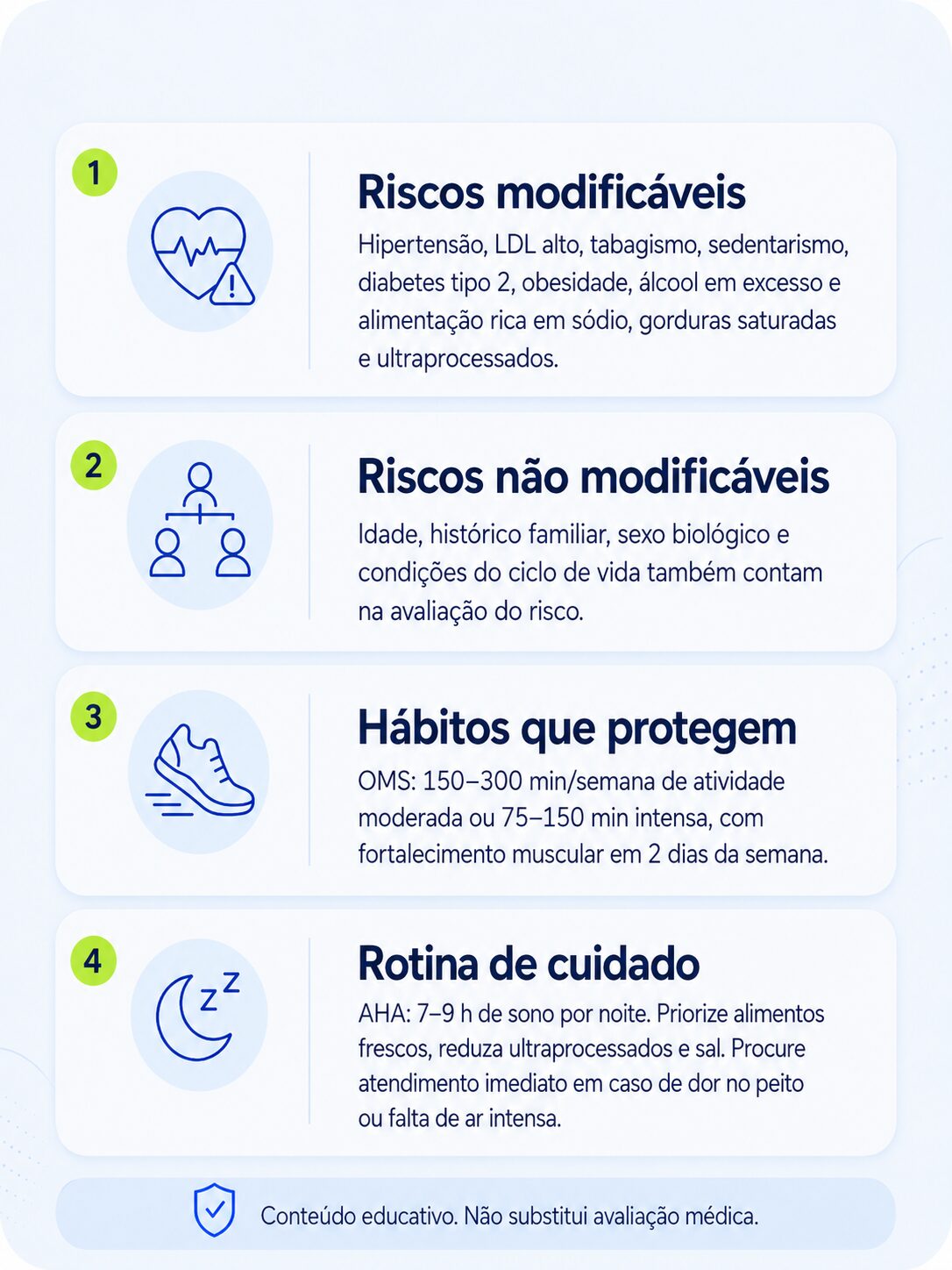
Some risk factors associated with the cardiovascular system are related to lifestyle and can be modified with proper monitoring. These include high blood pressure, high LDL cholesterol, smoking, a sedentary lifestyle, type 2 diabetes, obesity, excessive alcohol consumption, and a diet high in sodium, saturated fats, and ultra-processed foods.
High blood pressure is one of the main factors associated with cardiovascular risk. Managing it may involve dietary changes, physical activity, reducing salt intake, weight management, limiting alcohol consumption, and taking medications as prescribed.
High LDL cholesterol contributes to the process of atherosclerosis, which is the buildup of plaque on the walls of the arteries. According to organizations such as the Brazilian Hypertension Guidelines and the American Heart Association, reducing saturated and trans fats, prioritizing fiber-rich foods, and maintaining regular medical follow-up can help control cholesterol, depending on an individual’s risk profile.
Diet also influences cardiovascular health. A diet high in sodium can contribute to high blood pressure, while excessive saturated fat intake can lead to changes in lipid profile. A practical way to reduce this risk is to cut back on ultra-processed foods, limit salt intake, and prioritize fresh or minimally processed foods, always following professional guidance if you have an underlying medical condition.
Smoking is a major risk factor for cardiovascular disease. The World Health Organization notes that quitting smoking brings benefits at different time frames: within about 20 minutes, heart rate and blood pressure begin to drop; after one year, the risk of coronary heart disease is approximately half that of a person who continues to smoke; and, after 15 years, the risk of coronary heart disease approaches that of a nonsmoker.
Risk factors that cannot be modified
Some factors cannot be changed, but they help guide preventive care. Age, family history, biological sex, and certain conditions associated with the life cycle should be considered in cardiovascular risk assessment.
Cardiovascular risk tends to increase with age. People with a family history of early-onset cardiovascular disease may also need closer monitoring. This does not mean that the problem will recur, but it does indicate that prevention should be tailored to the individual.
In women, the transition to menopause warrants attention. The Brazilian Guidelines on Cardiovascular Health During the Climacteric and Menopause emphasize that gynecological history and the use of sex hormones throughout life should be considered in cardiovascular risk stratification. The decrease in estrogen levels after menopause may be associated with changes in the cardiometabolic profile, but each person’s risk depends on a combination of various factors.
Diet, physical activity, and sleep: three habits that affect the cardiovascular system
Cardiovascular prevention does not depend on a single choice. It usually results from a set of habits maintained over time.
The World Health Organization recommends that adults engage in 150 to 300 minutes of moderate-intensity aerobic physical activity per week, or 75 to 150 minutes of vigorous-intensity activity, in addition to muscle-strengthening activities on at least two days a week. For those who have been inactive for a long time or have chronic health conditions, it is important to seek guidance before starting or increasing the intensity of exercise.
Sleep is also an important part of cardiovascular health. The American Heart Association, as part of its “Life’s Essential 8” program, recommends that most adults get between 7 and 9 hours of sleep per night. Chronic sleep deprivation may be associated with poorer blood pressure control, increased metabolic stress, and a lower quality of life.
A balanced diet should be viewed as a routine, not as a one-time measure. In general, a diet rich in fresh foods, vegetables, legumes, and whole grains—and lower in ultra-processed foods—helps control weight, blood pressure, cholesterol, and blood sugar. People with hypertension, diabetes, kidney disease, or other conditions should follow personalized guidance.
When to Seek Medical Care
Chest pain, severe shortness of breath, fainting, sudden weakness on one side of the body, sudden slurred speech, mental confusion, severe pain radiating to the arm, back, jaw, or neck, and palpitations accompanied by discomfort are signs that require immediate attention.
The Ministry of Health emphasizes that, in cases of heart attack, emergency care within the first few minutes is essential to reduce the risk of death. If an acute cardiovascular event is suspected, it is not advisable to wait for spontaneous improvement.
For mild, persistent, or recurrent symptoms, the recommendation is to schedule a medical evaluation. Findings such as frequently elevated blood pressure, cholesterol levels outside the target range, abnormal blood glucose levels, fatigue upon exertion, or swelling in the legs should be interpreted in the context of the patient’s medical history, test results, and risk factors.
Which tests help assess cardiovascular health?
A cardiovascular evaluation may include blood pressure measurement, a physical examination, a review of family history, an assessment of lifestyle habits, and laboratory tests, such as total cholesterol and its fractions, triglycerides, blood glucose, and glycated hemoglobin.
In some cases, the doctor may order an electrocardiogram, an echocardiogram, a stress test, ambulatory blood pressure monitoring, or other tests. The need for these tests and how often they should be performed vary depending on age, symptoms, family history, and the presence of hypertension, diabetes, smoking, obesity, kidney disease, or previous cardiovascular events.
Therefore, rather than following a set list of screenings, it is more important to maintain regular, personalized follow-up. Prevention is most effective when it takes into account each person’s specific risk.
Quick Glossary
Atherosclerosis: a buildup of fatty deposits, calcium, and other substances on the walls of the arteries, which can reduce blood flow.
Stroke: stroke. It can occur due to a blockage in blood flow to a region of the brain or due to a ruptured blood vessel.
LDL cholesterol: a type of cholesterol associated with the buildup of plaque in the arteries when its levels are high.
HDL cholesterol: a fraction involved in transporting cholesterol back to the liver.
High blood pressure: Persistent high blood pressure, diagnosed based on appropriate measurements and clinical evaluation.
Triglycerides: a type of fat found in the blood. Elevated levels may contribute to cardiometabolic risk, especially when associated with other abnormalities.
Glycated hemoglobin: A test that indicates the approximate average blood glucose level over the past two to three months and helps in the assessment of diabetes and prediabetes.
Frequently Asked Questions About the Cardiovascular System
What is the cardiovascular system?
It is the system consisting of the heart, blood vessels, and blood. Its function is to transport oxygen and nutrients to the tissues and to remove metabolic waste products for elimination.
Does high blood pressure always cause symptoms?
No. High blood pressure can remain asymptomatic for a long time. That is why it is important to check your blood pressure regularly and see a doctor for follow-up care.
What is the difference between LDL and HDL?
High LDL levels can contribute to the buildup of plaque in the arteries. HDL helps transport cholesterol back to the liver. When interpreting the results, each person’s cardiovascular risk should be taken into account.
Does quitting smoking improve heart health?
Yes. According to the World Health Organization, the benefits begin quickly and accumulate over time. Quitting smoking is one of the most important steps you can take to reduce cardiovascular health risks.
How much exercise is recommended?
The World Health Organization recommends that adults engage in 150 to 300 minutes of moderate-intensity physical activity or 75 to 150 minutes of vigorous-intensity physical activity per week. People with chronic conditions or who are sedentary should seek guidance before starting.
Does this content replace a doctor's visit?
No. This article is for informational and educational purposes only. If you experience any symptoms, have questions, or notice changes in your test results, consult a healthcare professional.
References consulted
https://bvsms.saude.gov.br/cerca-de-400-mil-pessoas-morreram-em-2022-no-brasil-por-problemas-cardiovasculares
https://www.gov.br/saude/pt-br/assuntos/saude-de-a-a-z/i/infarto
https://www.ncbi.nlm.nih.gov/books/NBK279250/
https://pubmed.ncbi.nlm.nih.gov/36149425/
https://abccardiol.org/article/diretriz-brasileira-de-hipertensao-arterial-2025/
https://www.scielo.br/j/abc/a/fpRqtqpRp6YXLJmQTYSBggG/
https://www.who.int/europe/publications/i/item/9789240014886
https://www.who.int/news-room/questions-and-answers/item/tobacco-health-benefits-of-smoking-cessation
https://www.cdc.gov/tobacco/about/benefits-of-quitting.html
https://www.heart.org/en/healthy-living/healthy-lifestyle/lifes-essential-8
https://www.heart.org/en/health-topics/cholesterol/hdl-good-ldl-bad-cholesterol-and-triglycerides/lower-your-ldl
https://www.cdc.gov/cholesterol/about/index.html