












How Immunity Changes With Age: What Happens in the Body Starting in Middle Age and Why It Matters for Those Who Take Care of Their Hearts
Starting in middle age, the body begins to respond differently to infections, vaccines, and even everyday stress. This change doesn’t happen suddenly, but builds up over the years, altering the way the immune system recognizes threats, produces antibodies, and controls inflammatory processes. What many people don’t realize is that these changes have a direct impact on heart health, blood pressure, and cholesterol levels.
If the body’s defense system works well for decades, why does it start to fail just when we need it most? And why do so few resources on cardiovascular health mention immunity as part of the equation? There is a link between silent inflammation, the aging of immune cells, and increased cardiovascular risk that deserves more attention than it usually receives.
This guide explains how immunity changes with age—what science calls immunosenescence and how this process relates to heart health. Rather than simply listing what happens in the body, the content provides practical guidance on habits, vaccinations, sleep, and signs that warrant a professional evaluation.
What Is the Immune System, and How Does It Protect Us in Our Daily Lives?
The immune system is a complex network of cells, tissues, and organs that work together to defend the body against viruses, bacteria, fungi, and other threats. It functions like an intelligence center: it identifies foreign substances, activates specific responses, and retains a memory of invaders it has already encountered.
This defense operates on two main fronts: innate immunity is the first line of defense and includes physical barriers, such as the skin and mucous membranes, as well as cells (such as dendritic cells, macrophages, and neutrophils) and molecules that respond rapidly and nonspecifically to invading agents. Adaptive immunity, on the other hand, is a highly specific response, mediated by T and B lymphocytes, capable of generating antibodies and immune memory to protect the body during future exposures to the same pathogen.
In everyday life, this system works silently. When you fight off an infection without even realizing it, when you catch a cold and recover in a few days, when a vaccine provides protection for years—that’s the immune system doing its job. The problem begins when this system starts to lose its effectiveness.
How Does Immunity Change Starting in Middle Age?
As the years go by, the immune system never stops working. It changes the way it functions: the production of new immune cells decreases, the response to vaccines tends to slow down, and its ability to distinguish between real threats and the body’s own healthy tissues begins to falter.
Some changes that tend to become more apparent starting in middle age:
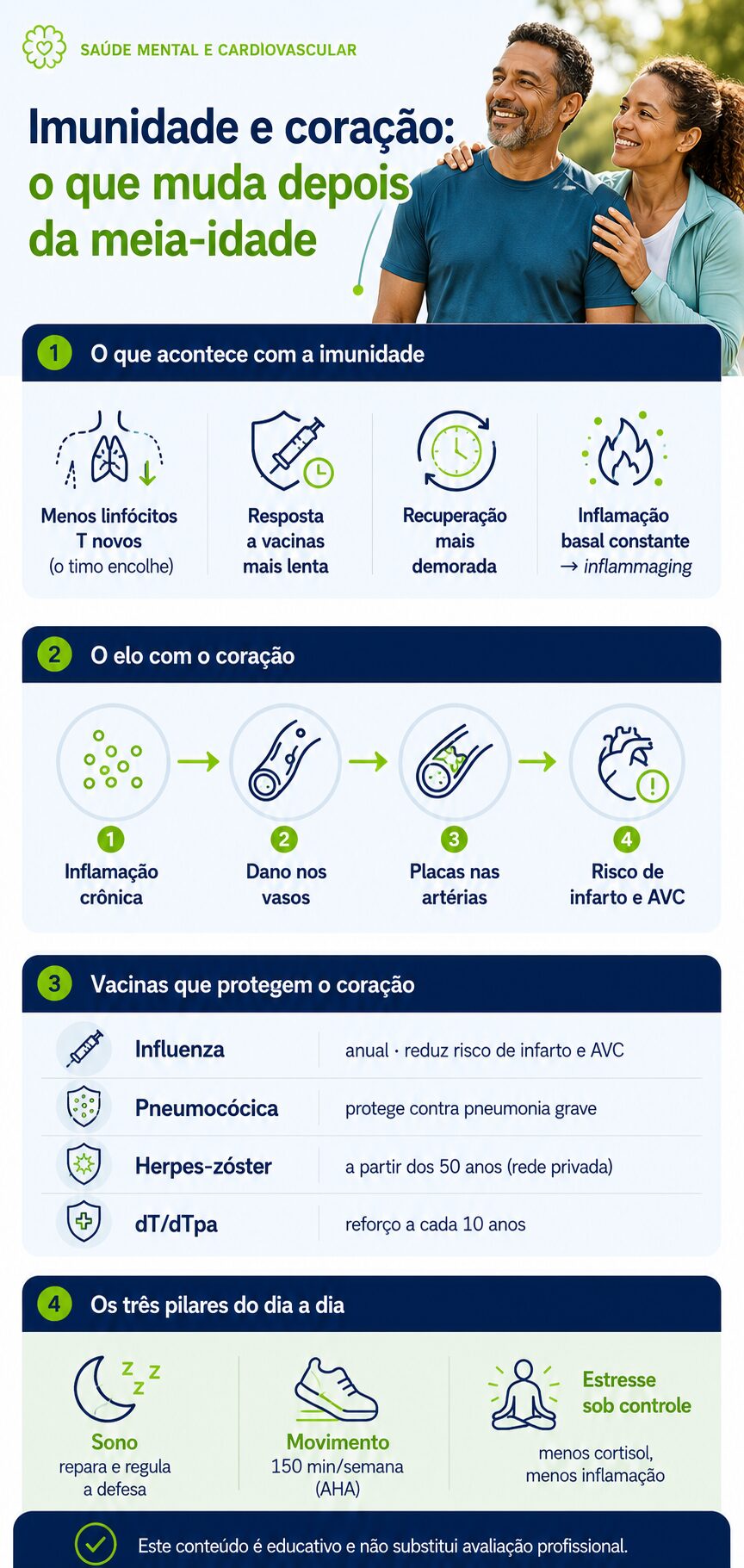
● Reduced production of new T cells: the thymus, the gland responsible for maturing these immune cells, begins to shrink as early as adolescence, but the practical effects become more noticeable over time.
● Reduced immune response: the body may take longer to produce antibodies after a vaccine, and the resulting protection tends to last for a shorter period of time.
● Slower recovery: colds, infections, and even minor cuts may take longer to heal or clear up.
● Increase in baseline inflammatory processes: the body begins to maintain a low but constant level of inflammation, even in the absence of an active infection.
These changes do not mean that a person has “no immunity.” It means that the system needs more support to continue functioning properly.
Immunosenescence: when the immune system begins to respond differently
The term “immunosenescence” describes the natural aging of the immune system. It is not a disease, but a biological process that affects everyone to varying degrees, influenced by genetics, lifestyle, sleep quality, diet, and stress levels.
In practice, immunosenescence manifests itself in several ways:
● Old immune cells accumulate in the body, taking up space that should be occupied by new, functional cells.
● Communication between the different parts of the immune system becomes less precise, which can lead to excessive or insufficient responses.
● The production of pro-inflammatory cytokines increases, fueling a state of low-grade chronic inflammation.
In the scientific literature, this persistent inflammatory condition is known as inflammaging, a condition associated with changes in various physiological systems, particularly cardiovascular health. And this is precisely where the discussion of immunity intersects with the discussion of cardiovascular health.
What is the relationship between immunity, chronic inflammation, and cardiovascular risk?
Low-grade chronic inflammation is one of the key mechanisms underlying the development of cardiovascular disease. When the immune system maintains constant inflammatory activity—even in the absence of infection—it can damage the walls of blood vessels, promote the buildup of fatty plaques in the arteries, and contribute to arterial stiffening.
This process is directly linked to conditions such as:
- Atherosclerosis: Inflammation plays an active role in the formation and instability of the plaques that block arteries.
- Hypertension: Inflammatory processes can alter the elasticity of blood vessels and the regulation of blood pressure.
- High cholesterol: Inflammation affects the way the body metabolizes lipids and can worsen the lipid profile.
- Acute events: Inflamed plaques are at greater risk of rupturing, which can trigger heart attacks and strokes.
The truth is that taking care of your heart and boosting your immunity aren't two separate things. They're parts of the same system.
Why do people who monitor their blood pressure and cholesterol also need to think about their immune system?
People who already monitor their blood pressure and cholesterol are, to some extent, tracking the consequences of processes involving the immune system. But a cardiology appointment rarely includes a discussion of immunity, the vaccination schedule, or sleep quality as risk factors.
Thinking of immunity as part of cardiovascular care means:
- Understand that respiratory infections, such as the flu and pneumonia, increase the risk of cardiac events, especially starting in middle age.
- Recognize that staying up to date on vaccinations protects not only against the infection itself, but also against associated cardiovascular complications.
- Keep in mind that habits that help strengthen the immune system—such as adequate sleep and regular physical activity—are the same ones that protect the heart.
The link between immunity and cardiovascular health is an aspect that often receives less attention in health communications aimed at the general public, although it is important for those who have passed middle age.
Adult Vaccination Schedule: Which Vaccines Are Important After Middle Age
There is a misconception that vaccines are just for children. For adults, especially those in middle age and older, keeping their vaccination schedule up to date is a complementary preventive measure that helps reduce the risk of infections that can trigger cardiovascular complications. It works in conjunction with interventions whose effectiveness is already well established, such as not smoking, controlling blood pressure and cholesterol, eating a healthy diet, and engaging in physical activity.
The main vaccines recommended for this age group include:
- Influenza (flu): annual recommendation. Influenza infection can trigger systemic inflammation capable of destabilizing atherosclerotic plaques, and reviews of studies indicate that keeping vaccinations up to date reduces the risk of heart attack and stroke in people with cardiovascular disease.
- Pneumococcal: protects against pneumonia and invasive infections that pose a high risk to people with cardiovascular disease.
- Shingles: Recommended for people aged 50 and older, this vaccine prevents the reactivation of the chickenpox (varicella) virus, which can cause severe pain and complications. In Brazil, this vaccine is available through the private healthcare system but not through the SUS.
- COVID-19: Booster doses in accordance with current guidelines, taking into account the cardiovascular risk associated with the infection.
- dTpa or dT (diphtheria, tetanus, and, in the case of dTpa, also pertussis): a booster every ten years. In the vaccination schedule for older adults, the routine booster is the dT vaccine; the dTpa vaccine is recommended in specific situations, such as for those who live with newborns.
The immune response to vaccines may become less robust as we age, which makes it even more important not to delay or skip doses. Consulting your doctor about the updated vaccination schedule is part of preventive care.
Habits That Support Immunity Over the Years
Supporting your immune system after middle age doesn't depend on miracle supplements or complex formulas. It depends, to a large extent, on consistently following habits that science has already linked to better health.
A balanced diet: prioritize fruits, vegetables, legumes, whole grains, high-quality proteins, and healthy fats. Nutrients such as vitamin D, zinc, vitamin C, and selenium play a direct role in immune function. Nutritional deficiencies, which are common starting in middle age, can compromise the body’s defense response.
Adequate hydration: Water plays a role in transporting nutrients and eliminating toxins, processes that are essential for immune function.
Body weight control: Excess visceral fat is an active source of inflammatory substances, exacerbating both immunosenescence and cardiovascular risk.
Avoid smoking and excessive alcohol consumption: both directly impair the immune system's ability to respond to infections and control inflammatory processes.
Stay on top of your checkups: Monitoring indicators such as blood sugar, cholesterol, blood pressure, and inflammatory markers helps identify imbalances early on that affect both the immune system and the heart.
Sleep, stress, and physical activity: three pillars that link immunity and the heart
These three factors serve as the cornerstones of both immune health and cardiovascular health. When one of them fails, the other two are affected.
Sleep
A review published in the journal *Pflügers Archiv: European Journal of Physiology* demonstrates that sleep plays a regulatory role in immune function. During deep sleep, the body produces protective cytokines, consolidates immune memory, and reduces inflammatory markers. Chronic sleep deprivation impairs antibody production following vaccination and increases susceptibility to infections. Chronic sleep deprivation impairs antibody production following vaccination, increases susceptibility to infections, and is associated with a higher risk of cardiovascular events, especially in people who already have high blood pressure or high cholesterol.
Stress
Chronic stress keeps cortisol levels elevated; this hormone, when present in excess, suppresses immune function and promotes systemic inflammation. This cycle contributes to both susceptibility to infections and cardiovascular risk. Stress management techniques, such as mindful breathing, enjoyable activities, and professional support when needed, are part of integrated care.
Physical activity
The American Heart Association recommends at least 150 minutes of moderate aerobic activity or 75 minutes of vigorous activity per week for adults. In addition to the well-known cardiovascular benefits, regular exercise improves the circulation of immune cells, reduces inflammatory markers, and contributes to better sleep quality. The key is balance: excessive exercise without adequate recovery can have the opposite effect and temporarily suppress immunity.
Warning signs that call for a professional evaluation
Certain situations indicate that the immune system may require medical attention. Recognizing them early makes a difference for people who already have cardiovascular risk factors.
- Frequent or recurrent infections, such as the flu, sinus infections, or urinary tract infections that come back regularly.
- Very slow recovery from common illnesses or minor procedures.
- Persistent fatigue that does not improve with adequate rest.
- Wounds that take a long time to heal.
- Recurrent episodes of herpes or other opportunistic infections.
- Unexplained changes in laboratory test results, such as persistently low white blood cell counts or elevated inflammatory markers.
These signs do not necessarily indicate a serious problem. However, they warrant further investigation, especially when combined with a history of high blood pressure, high cholesterol, diabetes, or other risk factors.
A conversation with your doctor about immunity doesn't have to wait until symptoms appear. It can—and should—be part of routine checkups.
Frequently Asked Questions About Immunity and Aging
Does immunity really decline with age?
The immune system does not “collapse” abruptly, but undergoes gradual changes. The production of new immune cells decreases, the response to vaccines slows down, and the body tends to maintain a state of low-grade chronic inflammation. These changes are natural and affect everyone to varying degrees.
What is immunosenescence?
Immunosenescence is the term used to describe the aging of the immune system. It is not a disease, but a biological process that reduces the effectiveness of the body’s defense responses and increases vulnerability to infections, autoimmune diseases, and certain types of cancer. Healthy habits can mitigate its effects.
Is there a link between a weakened immune system and heart problems?
Yes. Low-grade chronic inflammation, a hallmark of immunological aging, is directly linked to the development and progression of cardiovascular diseases, including atherosclerosis, hypertension, and events such as heart attacks.
How can you support your immune system after age 50?
The most effective strategies include maintaining a balanced, nutrient-rich diet, engaging in regular physical activity, getting enough sleep, managing stress, avoiding smoking and excessive alcohol consumption, and keeping your vaccination schedule up to date. Vitamin or mineral supplementation, such as vitamin D and zinc, should only be taken under a doctor’s supervision and when a deficiency has been confirmed by tests; taking supplements on your own does not boost immunity and may pose risks.
Do vaccines still work well in older people?
They work, but the immune response may be less robust than in younger people. For this reason, some vaccines have formulations specifically designed for older age groups, with adjusted doses or adjuvants that enhance the immune response. Keeping up to date with the vaccination schedule remains one of the most important preventive measures.
What is the connection between poor sleep and a weakened immune system?
Sleep deprivation reduces the production of protective cytokines and antibodies, impairs immune memory, and increases inflammatory markers. Consistently sleeping less than six hours a night is associated with greater susceptibility to infections and a poorer vaccine response.
When should I see a doctor about my immune system?
Whenever you notice recurrent infections, slow recovery from common illnesses, persistent fatigue with no apparent cause, wounds that won’t heal, or changes in routine test results, these signs warrant further investigation, especially in people who already have cardiovascular risk factors.
Sources consulted
IWASAKI, A.; MEDZHITOV, R. Regulation of adaptive immunity by the innate immune system. Science, vol. 327, no. 5963, pp. 291–295, 2010. DOI: 10.1126/science.1183021. Available at: https://www.science.org/doi/10.1126/science.1183021. Accessed Aug. 6, 2026.
MÜLLER, L.; DI BENEDETTO, S. Inflammaging, immunosenescence, and cardiovascular aging: insights into the implications of long COVID. Frontiers in Cardiovascular Medicine, vol. 11, 1384996, 2024. Available at: https://www.ncbi.nlm.nih.gov/pmc/articles/PMC11233824/. Accessed Aug. 6, 2026.
BARHOUMI, T. et al. Editorial: Inflammaging and immunosenescence: role in aging-associated cardiovascular diseases. Frontiers in Cardiovascular Medicine, vol. 12, 1616623, 2025. Available at: https://www.ncbi.nlm.nih.gov/pmc/articles/PMC12116523/. Accessed Aug. 6, 2026.
BESEDOVSKY, L.; LANGE, T.; BORN, J. Sleep and immune function. Pflügers Archiv – European Journal of Physiology, vol. 463, no. 1, pp. 121–137, 2012. Available at: https://pmc.ncbi.nlm.nih.gov/articles/PMC3256323/. Accessed Aug. 6, 2026.
YIN, J. et al. Relationship between sleep duration and all-cause mortality and cardiovascular events: a systematic review and dose-response meta-analysis of prospective cohort studies. Journal of the American Heart Association, vol. 6, no. 9, e005947, 2017. Available at: https://www.ahajournals.org/doi/10.1161/JAHA.117.005947. Accessed Aug. 6, 2026.
FERRUCCI, L.; FABBRI, E. Inflammageing: chronic inflammation in aging, cardiovascular disease, and frailty. Nature Reviews Cardiology, vol. 15, pp. 505–522, 2018. Available at: https://pubmed.ncbi.nlm.nih.gov/30065258/. Accessed Aug. 6, 2026.
BUTANTAN INSTITUTE. The flu vaccine does not cause strokes, but it protects against heart disease and heart attacks. São Paulo: Butantan, 2025. Available at: https://butantan.gov.br/covid/butantan-tira-duvida/tira-duvida-noticias/vacina-da-gripe-nao-causa-avc-mas-sim-protege-contra-doencas-do-coracao-e-infarto. Accessed Aug. 6, 2026.
BRAZIL. Ministry of Health. National Immunization Schedule. Brasília, DF: Ministry of Health. Available at: https://www.gov.br/saude/pt-br/vacinacao/calendario. Accessed Aug. 6, 2026.
BRAZIL. Ministry of Health. National Immunization Schedule – Older Adults. Brasília, DF: Ministry of Health. Available at: https://www.gov.br/saude/pt-br/vacinacao/arquivos/calendario-nacional-de-vacinacao-idoso. Accessed Aug. 6, 2026.
AMERICAN HEART ASSOCIATION (AHA). AHA Recommendations for Physical Activity in Adults and Children. Dallas: AHA. Available at: https://www.heart.org/en/healthy-living/exercise-and-physical-activity/fitness-basics/aha-recs-for-physical-activity-in-adults. Accessed Aug. 6, 2026.
MARTINS, P. R. J. et al. Immunosenescence: the relationship between leukocytes, cytokines, and chronic diseases. Geriatrics, Gerontology and Aging, vol. 5, no. 3, pp. 163–169, 2011. Available at: https://cdn.publisher.gn1.link/ggaging.com/pdf/v5n3a08.pdf. Accessed Aug. 6, 2026.